
How Dentistry for Family Needs Changes With Age
9 October 2026
Planning dentistry for family members means adapting care as teeth develop, health changes and daily routines become more or less manageable. The main shift is not that everyone needs more treatment as they get older. It is that a dentist reviews different risks, abilities and priorities at each stage.
A child learning to brush may need hands-on support. A teenager with braces may need a different cleaning approach. An adult starting a new medicine may need a review of dry mouth symptoms, while an older person may benefit from equipment that makes brushing easier.
For Central Coast households, understanding these changes can make dental appointments more useful. Rather than expecting the same care plan for everyone, ask what has changed since the last visit and whether that change affects prevention, monitoring or treatment. Age provides context, but it does not replace an individual assessment.
How does dentistry for family needs change with age?
Three things guide the shift: tooth development, the risk of dental disease and a person's ability to manage daily care. Medical history, previous dental work and personal preferences also matter.
The same birthday can mean very different things for two people. One may have healthy teeth and stable gums, while another may need support because of a health condition or difficulty cleaning.
| Life stage | What a dentist may reassess | What should not be assumed |
|---|---|---|
| Early childhood | Tooth eruption, decay risk and caregiver support | Baby teeth do not need care because they will fall out |
| School years and adolescence | Permanent teeth, bite development, cleaning skills and sporting activities | Every child needs orthodontic treatment |
| Adulthood | Gum health, medical changes and existing restorations | Older fillings must be replaced on a timetable |
| Later life | Saliva, chewing comfort, cleaning ability and support needs | Tooth loss or dentures are inevitable |
These are discussion points, not automatic treatment recommendations.
Children: review development and practical support
Healthdirect's guidance on children's dental care recommends a first dental visit when the first tooth appears or by 12 months of age. Early appointments can introduce the dental setting and give caregivers advice suited to their child.
An approach to dentistry for family members should account for both baby teeth and the permanent teeth that follow. Baby teeth help with chewing and speech and hold space for developing adult teeth. A sore or decayed baby tooth deserves assessment rather than being dismissed because it will eventually fall out.
As a child grows, the discussion may move from caregiver-led brushing to checking how well the child can clean independently. Wanting to brush alone does not necessarily mean they can reach every surface effectively.
When permanent molars appear, a dentist may assess their grooves and decay risk. Fissure sealants, thin protective coatings applied to chewing surfaces, can be considered for suitable teeth. They are not automatically required for every child and still need review over time.
Families can also discuss what a family dental visit may involve for a child, particularly when preparing for an unfamiliar appointment.
Teenagers: adapt care as independence increases
Teenage dental care often involves a change in responsibility. Parents may step back while teenagers begin making more choices about food, drinks, sport and their own appointments.
The useful question is whether daily care is keeping up with those changes. Frequent sugary drinks, difficulty cleaning around braces or a new contact sport can each prompt a different conversation with the dentist.
During adolescence, dentistry for family members may shift towards supporting independent decisions while keeping practical help available. A dentist can explain concerns directly to the teenager and agree on manageable changes rather than simply repeating instructions.
If orthodontic treatment is being considered, an assessment looks at tooth position, the bite and oral health. Treatment is not necessary for every teenager, and its suitability depends on individual findings and goals. General dentistry and orthodontics work together because teeth and gums still need preventive care during tooth movement.
For sport, ask whether a mouthguard is appropriate for the activity and whether an existing one still fits. Growth and changes in tooth position can affect its fit.
Adults: update the plan when health or dental work changes
In adulthood, changes in medical history can matter as much as changes in the mouth. Tell the dentist about new medicines, pregnancy, a diabetes diagnosis or other health changes, even if they seem unrelated to teeth.
For adults, dentistry for family members should reflect current health and the condition of existing dental work, rather than a birthday. A filling or crown does not need replacement simply because it has reached a certain age. The dentist assesses factors such as decay, cracks, symptoms and how well the restoration is functioning.
Pregnancy is a reason to update your history, not to automatically postpone all dental care. Your dentist can discuss appropriate assessment and treatment, including any timing considerations relevant to your circumstances.
If a problem is found, ask what the options involve. Depending on the findings, these might include monitoring, preventive care or treatment. Monitoring is only suitable when the dentist considers it clinically appropriate.
A recommendation should explain the expected benefit, relevant risks and alternatives. You can also ask which concerns need attention first and whether treatment can reasonably be staged. Costs and practical demands are part of that discussion, not something you need to leave until the end.
Older adults: focus on comfort, function and manageable care
Later-life dental care often needs to account for medicines, changes in hand movement and the support available at home. These factors can matter more than chronological age.
Dry mouth is one example. Some medicines and health conditions reduce saliva, which can make eating uncomfortable and increase the risk of tooth decay. Healthdirect explains the causes and management of dry mouth. Persistent symptoms deserve assessment; do not stop prescribed medicine without advice from the prescribing clinician.
Changes in grip or movement may make a previously effective brushing routine difficult. A larger toothbrush handle or an electric toothbrush may help some people. Others may need assistance from a family member or carer, with their agreement and dignity kept central.
If teeth are missing or dentures are becoming uncomfortable, discuss chewing, fit and cleaning rather than assuming a particular replacement is needed. The dentist can assess options and explain their maintenance requirements, limitations and risks.
Keeping care manageable may involve simpler home-care tools, a revised review schedule or coordination with other health professionals. More complex treatment is not automatically better for an older patient.
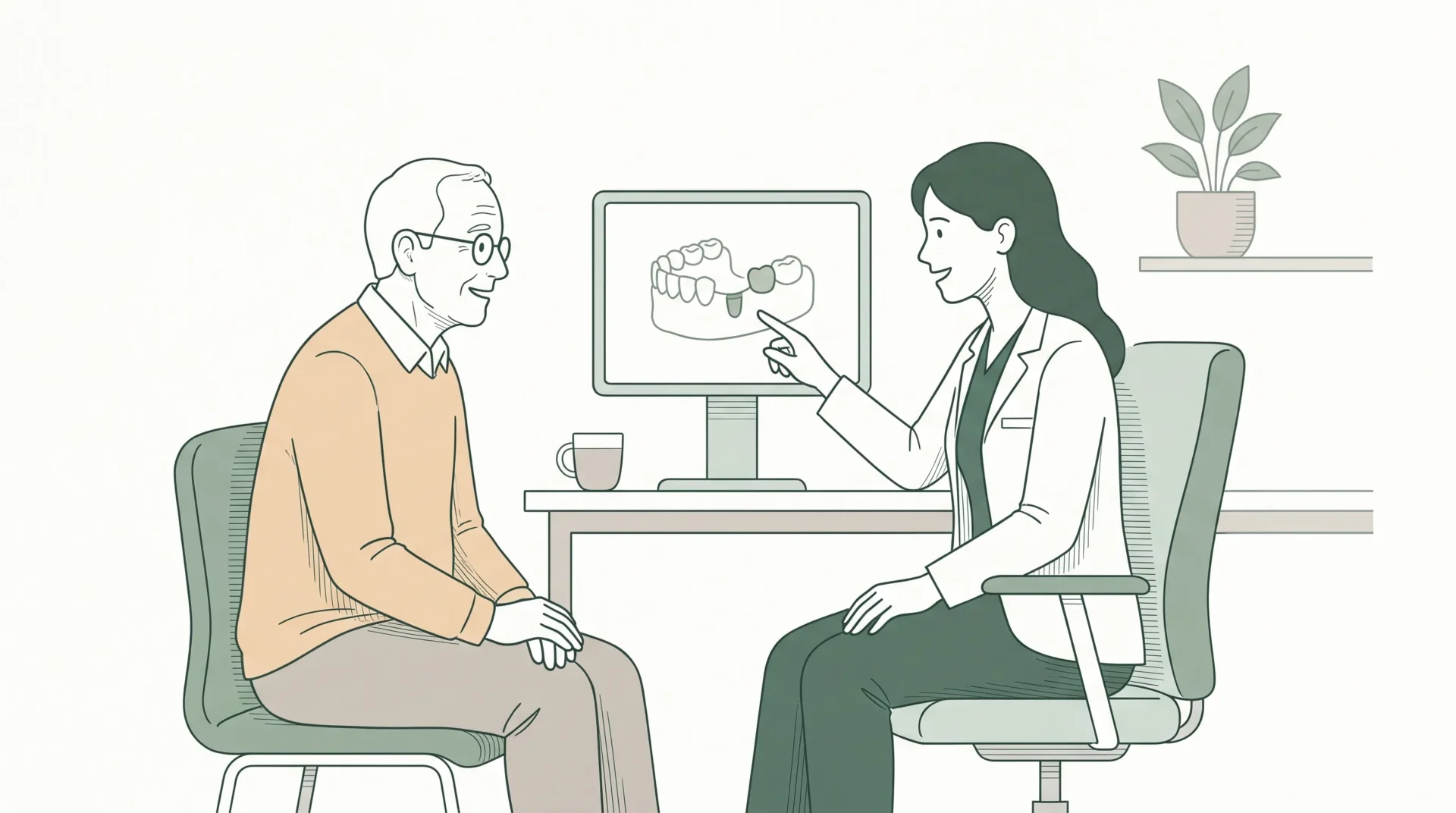
What should change at the next family appointment?
A useful appointment starts with an update, not an assumption that last year's plan still fits. Bring a current medicine list and mention symptoms, changes in eating or any difficulty managing daily care.
You might also discuss whether someone now needs more assistance, wants greater independence or has concerns about a previous dental experience. These details help the dentist understand what is practical as well as what is clinically appropriate.
When reviewing dentistry for family members, the most useful questions connect a recommendation to that person's circumstances:
- What has changed? Ask which findings or health factors have prompted the recommendation.
- What are the choices? Discuss benefits, risks and alternatives, including monitoring when appropriate.
- When should we return? Ask how the review interval relates to current risk rather than assuming everyone needs the same schedule.
- Are X-rays needed? Ask what information they would provide and whether previous images are available.
Dental X-rays are not automatically needed at every appointment. Their use depends on clinical findings, disease risk and the information required for assessment.
If anxiety affects attendance, mention it when arranging the visit. Understanding ways dental care can support anxious patients can help you prepare questions about communication, pauses and appointment planning.
When to arrange a review before the planned visit
A scheduled check-up is not a reason to wait when something has changed. Contact a dentist about persistent tooth pain, swelling, a broken tooth, ongoing gum bleeding, difficulty chewing or a mouth sore that has not healed after two weeks.
A knocked-out adult tooth needs urgent dental attention. Facial swelling accompanied by difficulty breathing or swallowing requires emergency medical care; call 000.
Less urgent changes also deserve discussion. A newly dry mouth, an uncomfortable denture or difficulty brushing may justify adjusting the care plan before the next routine appointment. The appropriate timing depends on the symptoms and your circumstances.
Frequently asked questions
Does everyone in a family need the same check-up schedule? No. Planning dentistry for family members involves assessing each person's needs separately. Review intervals can differ according to decay risk, gum health, medical history, tooth development and how effectively daily care is managed.
Does getting older mean I will need crowns, implants or dentures? No. Age alone does not establish a need for these treatments. Recommendations depend on the condition of your teeth, symptoms, function and preferences. Each option has limitations, maintenance needs and potential risks, which should be discussed before deciding.
Should dental care change when someone needs help from a carer? It may need to. Tell the dentist what the person can manage comfortably and what assistance is available. With appropriate consent, a carer can help explain practical difficulties and understand the agreed home-care plan. The person's preferences should remain part of the discussion.
Discuss a care plan that fits your family
All About Smiles sees patients at both the Ettalong and Kincumber locations. To discuss dentistry for family members with different needs, you can book an appointment online and share any health changes, symptoms or practical concerns.
An individual assessment can help clarify what needs attention, what can be monitored and which options may be suitable. You can also ask about expected costs and available payment plans before deciding on treatment.
Disclaimer
The information provided on this website is for general informational and educational purposes only. It is not intended to replace professional dental advice, diagnosis or treatment. Dental needs and treatment outcomes vary between individuals. Always seek advice from a qualified dental practitioner regarding your specific circumstances before making decisions about your oral health or treatment. A consultation and clinical assessment are required to determine which treatment options may be suitable for you. All dental procedures carry potential risks and benefits, which will be discussed with you before treatment.