
How Family Dental Visits Support Children’s Oral Health
19 August 2026
Family dental visits can give children more than a quick check of their teeth. They can help build familiar routines, support early detection of dental concerns, and make oral health feel like a normal part of family life. For parents on the Central Coast, a family dental approach can also make it easier to manage appointments for children, teens and adults together, rather than treating every dental visit as a separate event.
At All About Smiles, the team sees families at both the Ettalong and Kincumber locations. This guide explains how family dental visits may support children’s oral health, what usually happens during an appointment, and how parents can help children feel more comfortable with ongoing care.
Why family dental visits matter for children’s oral health
Children’s teeth change quickly. Baby teeth appear, chewing habits develop, adult teeth begin to come through, and the bite continues to grow. Regular dental visits give a dentist the opportunity to check whether things are developing as expected and to discuss any concerns before they become more involved.
Baby teeth are important even though they eventually fall out. They help children chew, speak clearly and hold space for adult teeth. Decay, gum irritation or early tooth loss can affect comfort and function, so it is worth taking children’s oral health seriously from an early age.
The Australian Dental Association’s patient information site, Teeth.org.au, provides parent-friendly information about caring for children’s teeth, brushing, diet and first dental visits. General guidance often recommends that children see a dentist when their first tooth appears or by around their first birthday. Your child’s individual needs may mean a different review schedule is appropriate, so it is best to ask your dentist.
Family appointments can also help children see dental care as ordinary. When a child watches a parent or sibling attend calmly, ask questions and have their teeth checked, it can make the experience feel less unfamiliar. This does not guarantee a child will feel relaxed, but familiarity can make a meaningful difference for some families.
What happens during a child’s family dental visit?
A child’s appointment is usually adjusted to their age, stage of development and comfort level. For a very young child, the visit may be short and focused on helping them become familiar with the dental setting. For an older child, the dentist may be able to complete a more detailed check of the teeth, gums, bite and oral hygiene.
Depending on the child, a dental visit may include:
- Checking baby teeth and adult teeth as they come through
- Looking for early signs of tooth decay, enamel wear or gum concerns
- Assessing tooth brushing technique and plaque build-up
- Discussing fluoride toothpaste, diet and drink choices
- Reviewing habits such as thumb sucking, dummy use or teeth grinding
- Checking bite development and whether orthodontic monitoring may be needed
- Considering X-rays only when clinically indicated
X-rays are not automatically needed at every child’s visit. A dentist may recommend them if they are likely to provide useful information, such as checking areas between teeth that cannot be seen clearly. The reason for any X-ray should be explained so parents can make an informed decision.
If preventive care such as fluoride treatment or fissure sealants is discussed, your dentist should explain why it may be recommended, what it involves, alternatives, limitations and any relevant risks. Suitability depends on your child’s oral health, age, decay risk and individual circumstances.
How family dental care helps build everyday habits
Most children need help learning the small daily routines that protect teeth and gums. A family dental visit gives parents a chance to ask practical questions about brushing, flossing, snacks, sports mouthguards, orthodontic concerns or how to manage a child who dislikes brushing.
Children often learn by watching. When the whole family talks about brushing teeth before school, drinking water regularly and limiting frequent sugary snacks, oral health becomes part of the household routine rather than a rule only children have to follow.
A dentist can also help tailor advice. A toddler who is learning to brush needs different support from a primary school child with new adult molars, and a teenager with braces or aligners may need more detailed cleaning guidance. If you would like a broader overview for different ages, All About Smiles has a practical guide to family dental care tips for every stage of life.
The most useful habits are usually simple, but they need consistency. Brushing twice daily with fluoride toothpaste, cleaning between teeth when recommended, choosing tooth-friendly snacks and drinking water are common foundations. For more day-to-day ideas, you may also find these everyday dental habits for healthy smiles helpful.
Age-by-age ways dental visits can support children
Children do not all develop at the same pace, but the table below gives a general idea of what a dentist may focus on at different stages. It is not a substitute for personalised advice.
| Child’s stage | Common focus during dental visits | How parents can support at home |
|---|---|---|
| Babies and toddlers | Tooth eruption, feeding habits, early brushing, dummy or thumb habits | Begin gentle brushing when teeth appear and avoid putting a child to bed with a bottle of milk or sweet drink |
| Preschool children | Decay risk, brushing help, snack and drink routines, comfort with dental visits | Supervise brushing and keep visits calm and familiar |
| Primary school children | Adult teeth coming through, fissures in molars, mouthguards for sport, brushing technique | Encourage water, pack tooth-friendly lunchbox options and help with brushing where needed |
| Tweens and teens | Orthodontic concerns, gum health, sports injuries, diet, independence with cleaning | Talk openly about habits, energy drinks, snacking and keeping up with dental checks |
This staged approach can help parents understand why dental care is not just about fixing problems. It is also about monitoring development, encouraging healthy routines and making informed decisions at the right time.
Supporting children who feel nervous about the dentist
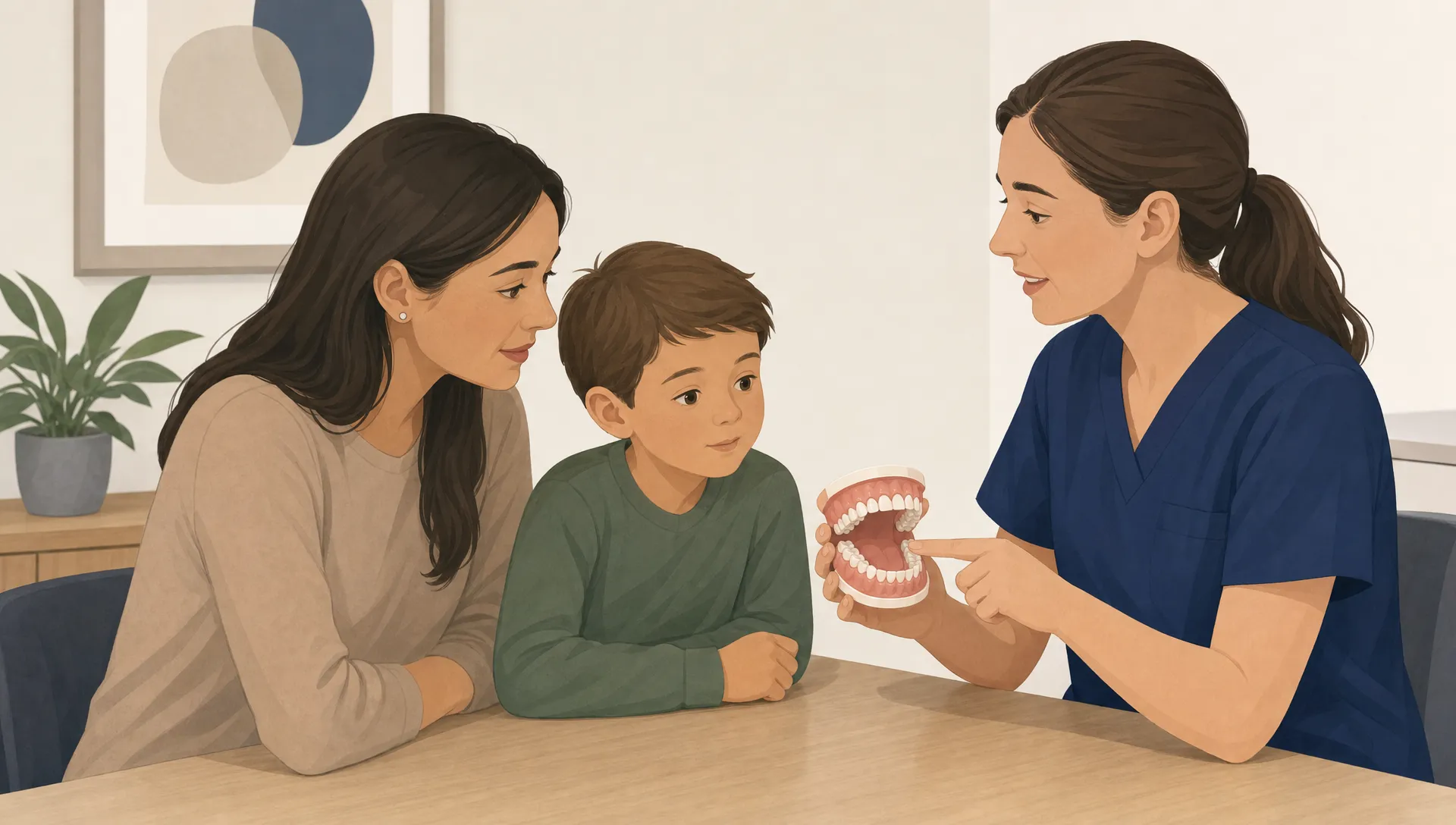
It is common for children to feel unsure about dental visits, especially if they have not been before or have had an uncomfortable experience. Family dental visits can help because the child is not experiencing the appointment in isolation. They may see a parent or sibling interact calmly with the dental team first.
Parents can also help by using simple, neutral language before the appointment. Instead of giving too much detail or making promises about how the visit will feel, you might say that the dentist will count and check their teeth, and that they can ask questions if they are unsure.
It can be helpful to avoid using dental visits as a threat, such as telling a child they will need treatment if they do not brush. This can make future appointments feel like punishment. A steadier message is that dentists help families check teeth, learn good habits and look after problems if they arise.
Some families also find it useful to plan dental visits alongside other normal self-care routines, such as school haircuts, sports gear or a haircut or styling appointment. The aim is not to make dental care seem dramatic, but to show children that looking after the body includes many ordinary appointments.
If your child is particularly anxious, let the dental team know when booking. Appointment length, explanations and the pace of the visit may be adjusted where appropriate. Not every concern can be resolved in one appointment, and some children may need a gradual approach.
When a child should see a dentist sooner
Routine dental checks are helpful, but some symptoms should be assessed before the next planned visit. A child may need a dental appointment sooner if you notice:
- Toothache, facial swelling or a pimple-like swelling on the gum
- Sensitivity that does not settle or affects eating and drinking
- A broken, chipped, loose or knocked-out tooth after an injury
- Bleeding gums that continue despite gentle brushing
- Ongoing bad breath, mouth ulcers or changes in the gums
- A baby tooth that appears very dark after trauma
- Difficulty chewing or avoiding food on one side of the mouth
These signs do not always mean something serious is happening, but they are worth checking. If there is facial swelling, fever, difficulty breathing, difficulty swallowing, or a significant injury, seek urgent medical or dental advice as appropriate.
Choosing ongoing family dental care on the Central Coast
For many families, continuity matters. Seeing the same practice over time can help the dental team understand your child’s dental history, previous concerns, comfort level and changing needs. It can also make it easier for parents to keep track of preventive visits, treatment plans and follow-up appointments.
When choosing a dentist for children, consider whether the practice communicates clearly, explains options in plain language and allows time for questions. You should feel comfortable asking why a treatment is being recommended, what alternatives exist, and what may happen if treatment is delayed or not chosen.
All dental procedures carry potential benefits and risks, and suitability varies between patients. This applies to children’s dental care as well as adult treatment. A dentist should assess your child’s oral health, medical history, development and individual circumstances before recommending any specific treatment.
If you are comparing options locally, this guide to choosing a Central Coast dentist for ongoing care outlines practical points to consider, including communication, preventive care and treatment planning.
How parents can make the most of a family dental appointment
A little preparation can make a dental visit more useful. Before the appointment, think about any questions you want to ask, such as whether your child is brushing effectively, whether their adult teeth are coming through normally, or whether a mouthguard is appropriate for sport.
It can also help to mention relevant health information, including medical conditions, medications, allergies, previous dental experiences or recent injuries. If your child has sensory sensitivities, anxiety or communication needs, sharing this information beforehand may help the team plan the appointment more thoughtfully.
After the visit, try to focus on one or two practical changes rather than trying to change everything at once. For example, you might improve brushing supervision, switch to water between meals, or book a follow-up if a specific concern needs review. Small, steady habits are often easier for children and parents to maintain.
Frequently Asked Questions
How often should children have dental check-ups? The right timing depends on your child’s age, oral health, decay risk and individual needs. Many children are reviewed every 6 to 12 months, but your dentist may recommend a different interval after assessment.
What age should my child first see a dentist? General Australian dental guidance commonly recommends a first visit when the first tooth appears or by around the first birthday. This early visit is often about advice, prevention and helping parents know what to watch for.
Are baby teeth really important if they fall out? Yes. Baby teeth help children chew, speak and hold space for adult teeth. Problems with baby teeth can affect comfort and may influence later dental development, so they should be cared for carefully.
Will my child need dental X-rays? Not necessarily. X-rays are considered when they are clinically useful, such as when a dentist needs information that cannot be seen during a visual examination. Your dentist should explain the reason before taking them.
What if my child is scared of dental visits? Tell the practice when booking so this can be considered. A calm introduction, simple explanations and gradual familiarisation may help some children, although experiences vary.
Can family dental visits replace daily brushing and flossing? No. Dental visits support children’s oral health, but daily home care remains essential. Brushing with fluoride toothpaste, cleaning between teeth when recommended, and limiting frequent sugary foods and drinks all play important roles.
Booking a family dental visit
If you would like to discuss your child’s oral health, ask questions about dental development or book a family dental visit, you can make an appointment with All About Smiles at either the Ettalong or Kincumber location.
A dental appointment can help you understand what is happening in your child’s mouth and what options may be suitable for their needs. Advice and treatment recommendations should always be based on an individual assessment.
Disclaimer
The information provided on this website is for general informational and educational purposes only. It is not intended to replace professional dental advice, diagnosis or treatment. Dental needs and treatment outcomes vary between individuals. Always seek advice from a qualified dental practitioner regarding your specific circumstances before making decisions about your oral health or treatment. A consultation and clinical assessment are required to determine which treatment options may be suitable for you. All dental procedures carry potential risks and benefits, which will be discussed with you before treatment.