
Understanding Dental Services Offered During a Check-up
9 October 2026
The dental services offered during a check-up usually centre on assessing your teeth, gums and mouth, discussing any concerns and planning appropriate care. Cleaning, X-rays or preventive treatments may also be recommended, but they are not automatically needed at every appointment. A check-up is an assessment, not a requirement to proceed with further treatment.
Knowing this distinction can make booking easier. You can ask what the appointment includes, whether additional services might be recommended and what they would cost before agreeing to them. This guide explains the main parts of a check-up and how decisions about further care are made.
For patients on the Central Coast, the useful question is not simply which services are available. It is which services are appropriate for your current oral health, symptoms and circumstances.
Understanding the dental services offered during a check-up
A discussion about your health and concerns
Your dentist will usually begin by asking about your dental concerns and relevant medical history. This helps them understand symptoms and identify factors that could affect an examination or treatment.
Mention any discomfort, bleeding gums, sensitivity or changes you have noticed, even if they come and go. Medicines, allergies, pregnancy and medical conditions can also influence dental care. For example, some medicines contribute to dry mouth, which can increase the risk of tooth decay.
If dental appointments make you anxious, raise this before the examination starts. You can discuss how you would like procedures explained and agree on a signal to request a pause. You do not need to wait until you feel uncomfortable to speak up.
An examination of your teeth, gums and mouth
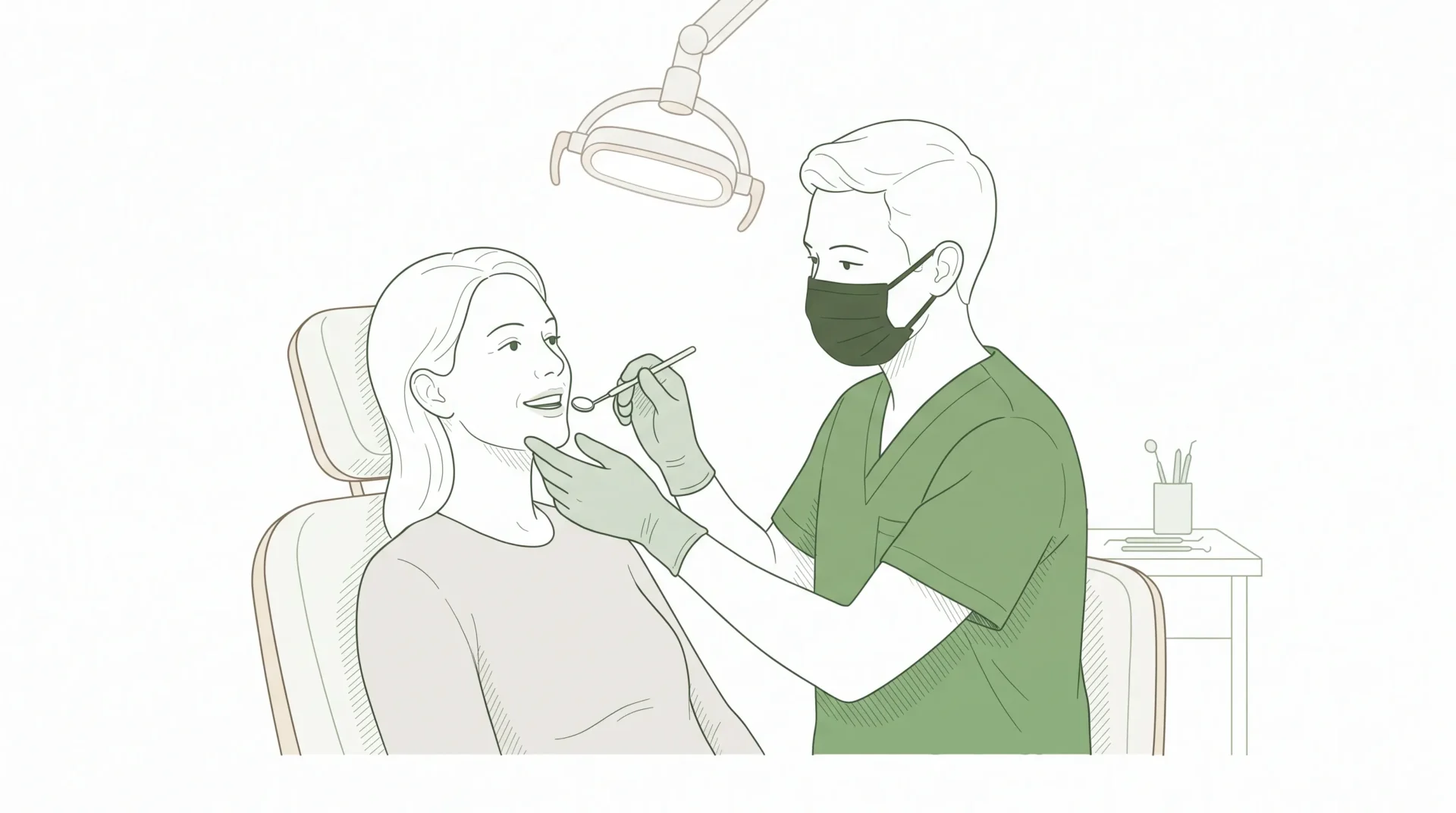
The dental services offered at this stage focus on gathering information rather than immediately treating every finding. Your dentist examines your teeth for signs of decay, wear, cracks and problems with existing fillings or other restorations.
They also assess your gums for inflammation and signs of disease. Depending on your needs, this may include gently measuring the spaces between your teeth and gums. These measurements help assess the tissues supporting your teeth. Our explanation of how dentists check for early signs of gum problems covers this part of an examination in more detail.
Your dentist may also look at your tongue, cheeks and other soft tissues, and assess how your teeth meet when you bite. Tell them about any persistent mouth ulcer, lump or unusual patch. Some findings need further investigation or referral, and an examination alone cannot identify every possible problem.
Services that depend on your individual assessment
Dental X-rays when they are clinically useful
X-rays can provide information that is not visible during an examination, such as decay between teeth or changes around tooth roots. They may help your dentist investigate symptoms or plan treatment.
The dental services offered should reflect a clinical need, so X-rays are not automatically required at every check-up. Your dentist considers your symptoms, examination findings, risk of dental disease and available previous images when deciding whether new images would be useful.
Dental X-rays involve ionising radiation. Your dentist should explain why an image is recommended and choose an appropriate examination. Let the team know if you are pregnant or think you may be pregnant so this can be considered in planning your care.
You can ask what the X-ray is intended to show and how the result could affect your treatment options. Healthdirect’s guide to dental check-ups provides a useful overview of examinations and related care.
Professional cleaning if needed
A professional clean removes plaque and calculus from tooth surfaces. Plaque is a film of bacteria, while calculus is hardened plaque that cannot be removed with ordinary brushing.
Cleaning may involve scaling, which removes deposits with dental instruments, and polishing where appropriate. Whether it is recommended depends on the deposits present, your gum health and other findings. Ask whether cleaning is included in the appointment you have booked or is a separate service.
Some people experience temporary sensitivity or gum tenderness after cleaning. Tell your dentist if you already have sensitive teeth or concerns about discomfort so these can be discussed.
Professional cleaning supports home care but does not replace it. If gum disease is identified, the care required may be more involved than a routine clean and may need separate appointments.
Preventive advice and additional protection
The dental services offered may include tailored advice about brushing, cleaning between teeth, fluoride toothpaste and dietary habits. Advice should address your actual needs rather than assume everyone requires the same changes.
Additional fluoride treatment may be considered for people at increased risk of decay. Fissure sealants, protective coatings placed in the grooves of selected teeth, may also be appropriate in some circumstances.
Neither option is necessary for every patient. Your dentist can explain the expected benefit, limitations and any relevant risks. Sealants need checking over time, and preventive treatments do not remove the need for daily oral care.
What happens if the dentist finds a problem?
A finding during a check-up does not necessarily mean you need treatment that day. Your dentist should explain what they have found, whether more information is needed and the reasonable options available.
For example, an early area of decay may be suitable for preventive care and monitoring, while a cavity may require a filling. A damaged tooth needs assessment before deciding whether a filling, crown or another approach is appropriate.
| Finding discussed at a check-up | What may happen next |
|---|---|
| Early signs of tooth decay | Preventive advice, fluoride measures or monitoring, depending on the assessment |
| A cavity or damaged filling | Discussion of whether repair or replacement is needed |
| Signs of gum disease | Further gum assessment and a suitable care plan |
| A cracked or painful tooth | Additional tests and discussion of treatment options |
| An unusual soft-tissue change | Review, further investigation or referral where appropriate |
The dental services offered after an examination should be linked to these findings and your preferences. More involved procedures carry their own benefits, risks and limitations, which need discussion before you consent. You can also ask whether monitoring, an alternative treatment or a second opinion is reasonable.
Questions to ask before agreeing to additional care
A check-up should give you enough information to make an informed decision. Before agreeing to cleaning, imaging or further treatment, ask what it involves and why it has been recommended.
Useful questions include:
- What did you find, and can you explain it in everyday language?
- What are the benefits, risks and alternatives, including monitoring if appropriate?
- Does this need attention soon, or can it be planned for another appointment?
- What is included in today’s fee, and what would cost extra?
- How many appointments might be needed, and what follow-up care is involved?
There is no universal check-up package across dental practices. Confirm the booking details rather than assuming an examination, clean and X-rays are all included together.
The dental services offered and their costs should be clear before you decide whether to proceed. All About Smiles has payment plans available; ask the team about current terms and whether a plan is suitable for your proposed care.
If anxiety makes it difficult to absorb information, request a slower explanation or time to consider your options. Our guide to gentle dental care for anxious patients explains communication approaches you can discuss with the team.
Planning your next visit
Your next check-up should be based on your oral health and risk factors, rather than assuming one interval suits everyone. A person with active gum disease, frequent decay or significant dry mouth may need a different review schedule from someone whose mouth is stable.
Before leaving, ask when to return and what changes should prompt an earlier appointment. Keep any agreed home-care instructions practical, especially if you have difficulty cleaning particular areas.
Do not wait for a routine check-up if you develop ongoing toothache, swelling, a broken tooth or a dental injury. Contact a dentist for advice. If swelling is affecting breathing or swallowing, call 000 or attend an emergency department.
Frequently asked questions
Does every check-up include a clean? No. Cleaning may be booked alongside an examination, but what is included varies. Whether cleaning is clinically needed depends on your teeth and gum health. Confirm the appointment inclusions when booking.
Can I have a check-up without agreeing to treatment? Yes. An examination helps establish what care may be appropriate. You can discuss recommendations, costs and alternatives before deciding about additional services. If something needs prompt attention, ask the dentist to explain why.
Are cosmetic treatments part of a routine check-up? Cosmetic procedures are not a routine requirement. If you have appearance-related concerns, you can raise them during the appointment. The dental services offered for those concerns require an individual assessment and a separate discussion of suitability, risks and alternatives.
What if I have not seen a dentist for several years? Tell the team when booking and mention any symptoms. The appointment can focus on understanding your current oral health and setting priorities. You do not need to know which treatment to request before an assessment.
Discuss your check-up with All About Smiles
All About Smiles sees patients at both the Ettalong and Kincumber locations on the NSW Central Coast. To arrange an assessment, you can book an appointment with All About Smiles online. When booking, ask what the check-up includes and let the team know about any symptoms, access needs or dental anxiety.
Disclaimer
The information provided on this website is for general informational and educational purposes only. It is not intended to replace professional dental advice, diagnosis or treatment. Dental needs and treatment outcomes vary between individuals. Always seek advice from a qualified dental practitioner regarding your specific circumstances before making decisions about your oral health or treatment. A consultation and clinical assessment are required to determine which treatment options may be suitable for you. All dental procedures carry potential risks and benefits, which will be discussed with you before treatment.