
How Gentle Dental Care Supports Anxious Patients
10 September 2026
Dental anxiety is common, and it can make even a routine check-up feel difficult to book. Gentle dental care is about more than speaking softly. It involves clear communication, consent, practical comfort measures and allowing enough time for patients to understand what is happening before treatment begins.
For some people, nervousness comes from a previous dental experience. For others, it may relate to fear of needles, gagging, embarrassment, loss of control, sounds, smells or not knowing what to expect. Whatever the reason, anxiety is a valid concern to raise with your dentist. This article explains how a calm, measured approach can support anxious patients and what you can ask for when arranging dental care.
Why dental anxiety should be taken seriously
Dental anxiety can range from mild uneasiness to avoiding dental visits for years. Healthdirect describes anxiety as involving feelings of worry, nervousness or fear that can affect daily activities. In a dental setting, those feelings may show up as a racing heart, difficulty sleeping before an appointment, nausea, sweating or cancelling visits even when you know care may be needed.
Avoidance can sometimes allow small dental concerns to become more complex, but shame rarely helps anyone take the next step. A more useful approach is to acknowledge the anxiety, talk about it early and plan an appointment that feels manageable. The Australian Dental Association’s patient site, Teeth.org.au, also discusses dental anxiety and encourages people to speak with their dental team about their concerns.
What gentle dental care means in practice
In a dental setting, gentle dental care means the clinical team considers both the mouth and the person attached to it. It does not mean ignoring a dental problem or promising that treatment will feel the same for everyone. It means using appropriate techniques, clear explanations and patient consent to reduce unnecessary stress where possible.
A gentle approach may include checking what you are worried about, explaining options in plain language, agreeing on a stop signal and taking breaks when clinically appropriate. It also includes being honest about possible risks, benefits and alternatives, because informed patients are often better able to make decisions that suit their circumstances.
Clear explanations before treatment begins
Not knowing what is about to happen can make anxiety worse. A dentist can explain the purpose of the appointment, what they plan to assess and whether any treatment is recommended. This may include discussing X-rays, tooth charting, gum checks, cleaning, fillings or other procedures, depending on your needs.
You can ask your dentist to talk through each stage before starting. Some patients prefer detailed explanations, while others prefer a brief outline and fewer details. There is no single right preference. The important point is that your dentist understands what style of communication is most helpful for you.
Consent, pauses and a sense of control
Loss of control is a common concern for anxious patients. Gentle dental care often includes simple agreements that make an appointment feel more predictable. For example, you might agree to raise your left hand if you want the dentist to stop or pause.
Consent should also be ongoing. If a dentist recommends treatment, you can ask what the treatment is for, what may happen if it is delayed and whether there are other reasonable options. Dental procedures carry potential risks and benefits, and suitability depends on your oral health, medical history, anatomy, treatment goals and individual circumstances.
Comfort measures without unrealistic promises
Some patients worry that a dentist will dismiss their discomfort. A gentle approach involves checking comfort, using local anaesthetic when appropriate for the procedure and allowing time for anaesthetic to work. Dentists may also adjust chair position, use suction carefully, offer short breaks or modify the order of treatment where clinically suitable.
No dental practice should promise that dentistry is completely free of discomfort or risk. Treatment experiences vary. What matters is that your concerns are heard, your comfort is monitored and your dentist responds appropriately if something does not feel right.
What anxious patients can expect at a first appointment
For many people, gentle dental care starts before any treatment begins. When booking, you can mention that you feel anxious and ask whether the first visit can focus on assessment, discussion and planning rather than immediate treatment, unless there is an urgent concern that needs prompt attention.
A first appointment may involve a conversation about your dental history, current concerns, medical history and what has made previous visits difficult. The dentist may examine your teeth, gums, jaw and soft tissues, and may recommend X-rays if they are needed to understand a concern. If you would like help preparing, All About Smiles has a practical guide on preparing for a dental consultation.
| Part of the visit | How a gentle approach may help |
|---|---|
| Booking the appointment | You can flag anxiety in advance so the team is aware before you arrive. |
| Initial conversation | You can explain triggers, previous experiences and what helps you feel calmer. |
| Examination | The dentist can explain what they are checking and pause if needed. |
| Treatment planning | Options, timing, risks and alternatives can be discussed before decisions are made. |
| Follow-up care | Future visits can be planned in a way that considers both clinical needs and anxiety levels. |
How dental anxiety can affect treatment choices
Anxiety does not automatically mean you need a complex treatment plan. Sometimes, the first priority is simply to complete an examination and understand what is happening. If treatment is recommended, your dentist can explain which concerns are more time-sensitive and which may be monitored or planned later, depending on your clinical situation.
Gentle dental care can also support staged decision-making. For example, a patient who has avoided visits for some time may prefer to start with a check-up and discussion, then book treatment separately after having time to consider the options. This may not be suitable for every dental issue, especially where infection, swelling, trauma or significant pain is present, but it can be helpful in many non-urgent situations.
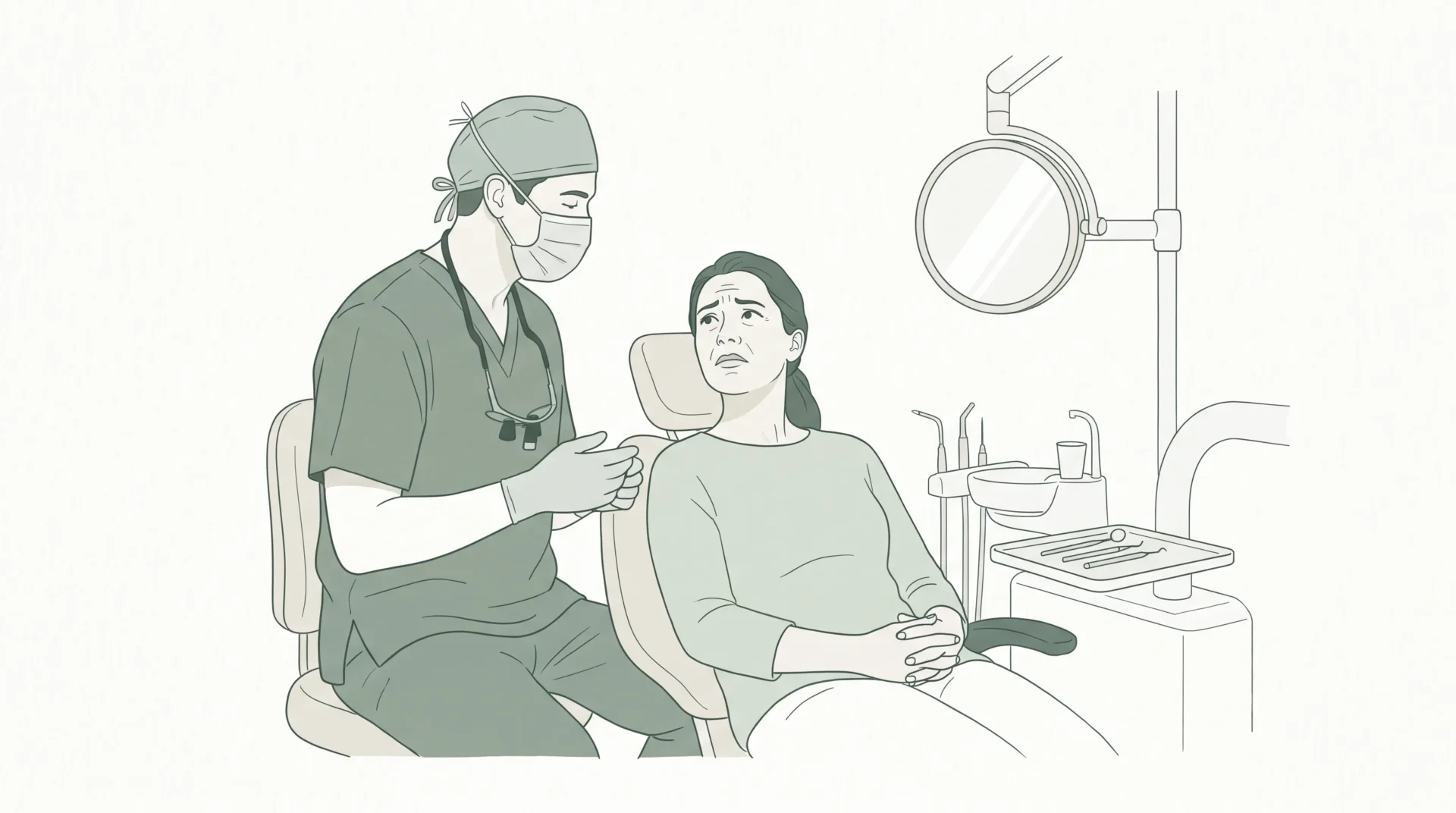
Practical ways to make a dental visit feel more manageable
There are several simple steps that may help reduce anxiety before and during an appointment. They will not remove anxiety for everyone, but they can make the visit feel more structured.
- Tell the clinic when booking that you feel nervous, so this can be noted for the appointment.
- Choose a time of day when you are less rushed, if your schedule allows.
- Write down your main concerns, symptoms and questions before you arrive.
- Ask for a stop signal before the examination or treatment begins.
- Bring headphones if sounds are a trigger, provided it is safe and practical during the visit.
- Ask whether the appointment can begin with discussion only, especially if you have avoided care for a long time.
It may also help to avoid overloading the appointment with too many goals. For some patients, attending the visit, meeting the dentist and completing an examination is already a meaningful step. Your dentist can then discuss what care may be recommended and whether it can be planned over more than one visit.
When a dental concern should not be put off
Anxiety is important, but certain symptoms should be assessed promptly. These include facial swelling, fever with dental pain, trauma to the teeth or jaw, uncontrolled bleeding, a spreading infection, difficulty opening the mouth or severe pain that is not settling. These symptoms do not always mean something serious is happening, but they do warrant professional advice.
If you are unsure whether a concern is urgent, contacting a dental clinic can help you understand the next appropriate step. All About Smiles provides general, emergency and advanced dental treatments, and the team can advise whether an appointment is needed based on the information you provide. For a broader overview of common dental care, you can read about general dental services that support everyday oral health.
Gentle dentistry for children and families
Dental anxiety can affect children, teenagers and adults. In families, a calm approach to dental visits can help children become familiar with the dental setting without feeling pressured. This might include explaining the visit in simple terms, avoiding scary words and letting the dentist introduce instruments gradually where appropriate.
For parents and carers, gentle dental care also means receiving clear information about a child’s teeth, brushing habits, diet, thumb sucking, mouthguards or other age-related concerns without blame. If your child is nervous, mention this when booking so the appointment can be approached with that in mind. All About Smiles has more information about how family dental visits can support children’s oral health.
Choosing a dentist when you feel anxious
If you are nervous about booking, look for a dental team that communicates clearly, explains fees and treatment options, allows questions and respects informed consent. It is reasonable to ask how the clinic supports anxious patients before making an appointment. You do not need to provide a long explanation if you do not want to. A simple statement such as, “I feel anxious about dental visits and would like a slower first appointment,” is enough to start the conversation.
All About Smiles sees patients at both the Ettalong and Kincumber locations on the NSW Central Coast. The team provides general dentistry, cosmetic dentistry, children’s dentistry, emergency dental care and other treatments, with recommendations made after an individual assessment. Flexible payment options are also available, although costs and suitability depend on the treatment discussed.
The goal of gentle dental care is not to tell patients they should feel completely relaxed. It is to create conditions where concerns can be discussed, choices can be understood and care can be planned in a way that respects the person as well as the dental problem.
Frequently asked questions
Is dental anxiety common? Yes. Many people feel nervous before dental appointments, and some avoid care because of anxiety. If this applies to you, telling the dental team early can help them plan the appointment more thoughtfully.
Can I ask the dentist to stop during treatment? Yes. You can ask to agree on a hand signal before the appointment begins. Whether the dentist can stop immediately may depend on what is happening clinically, but a clear signal helps the team respond as safely and quickly as possible.
Will my first appointment involve treatment? Not always. A first visit may focus on discussion, examination and treatment planning, unless you have a concern that needs prompt attention. You can ask what is planned when you book.
What if I feel embarrassed about my teeth? Dentists regularly see a wide range of dental concerns. You can explain that embarrassment is part of your anxiety. The purpose of an appointment is to assess your oral health and discuss suitable options, not to judge you.
Can children receive gentle dental care too? Yes. Children may benefit from calm explanations, familiar routines and appointments that are suited to their age and level of understanding. Suitability for any treatment depends on the child’s individual needs and the dentist’s assessment.
If dental anxiety has made it hard to book an appointment, you can contact All About Smiles to discuss your concerns and arrange a visit at either the Ettalong or Kincumber location. A first appointment can help clarify what is happening and what options may be suitable for your circumstances.
Disclaimer
The information provided on this website is for general informational and educational purposes only. It is not intended to replace professional dental advice, diagnosis or treatment. Dental needs and treatment outcomes vary between individuals. Always seek advice from a qualified dental practitioner regarding your specific circumstances before making decisions about your oral health or treatment. A consultation and clinical assessment are required to determine which treatment options may be suitable for you. All dental procedures carry potential risks and benefits, which will be discussed with you before treatment.