
What to Look For in a Central Coast Dental Clinic
27 August 2026
When you search for a “dental clinic Central Coast”, you are usually looking for more than the closest available appointment. You want a practice that can explain your options clearly, provide appropriate care for your situation and make it easier to keep up with routine dental visits over time.
A good dental clinic should help you understand what is happening in your mouth, what treatment may involve and what choices you have. It should also be clear about fees, consent, risks and limitations before you agree to treatment.
This guide focuses on clinic-level details, such as services, communication, access and patient information. If you would like a broader checklist for choosing an individual dentist, All About Smiles also has a guide on how to choose a dentist on the Central Coast.
Your dental clinic Central Coast checklist
When comparing clinics, it can help to look beyond website photos or a single appointment time. Practical signs to check include:
- Whether dental practitioners are registered and the clinic communicates professionally
- Whether the clinic explains services, fees, treatment options and limitations clearly
- Whether routine, emergency, family and cosmetic concerns can be assessed appropriately
- Whether the appointment process feels organised and respectful
- Whether the location and booking options are realistic for your household
No clinic can promise a particular result for every patient. Oral health, medical history, anatomy, habits, treatment goals and budget can all influence what may be suitable. A clinical assessment is needed before a dentist can recommend a treatment plan.
Registration, professional standards and clear information
In Australia, dental practitioners must be registered to practise. You can check a practitioner’s registration through the AHPRA public register, which lists registered health practitioners and any registration conditions that apply.
A dental clinic’s communication should also feel measured and realistic. Be cautious if a website or advertisement promises guaranteed outcomes, makes treatment sound suitable for everyone or uses strong claims without explaining risks and individual variation. Dental treatment is healthcare, so information should support informed decisions rather than pressure you into booking.
A useful mix of general, family, emergency and cosmetic care
A Central Coast dental clinic does not need to offer every treatment imaginable, but it should be able to explain what it can assess, what it can provide and when referral may be appropriate. For many patients, a useful clinic is one that can support everyday oral health as well as more specific concerns.
At All About Smiles, patients can speak with the team about general dentistry, emergency dental care, cosmetic dentistry, dental implants, root canal therapy, children’s dentistry, same-day crowns, veneers and orthodontic options. Treatment suitability depends on individual assessment, so the first step is usually understanding your current oral health and what you are hoping to address.
For routine care, it is helpful to know what a check-up, clean or filling appointment may involve. This overview of general dental services for everyday oral health explains common services and why prevention is often part of long-term care.
If your concern is cosmetic, such as tooth colour, shape, spacing or worn edges, look for a clinic that discusses oral health first. Cosmetic dentistry can include several options, and not every option is suitable for every mouth. All About Smiles has a separate guide to common cosmetic dental treatment options if you are still learning what each treatment involves.
Communication that makes decisions easier
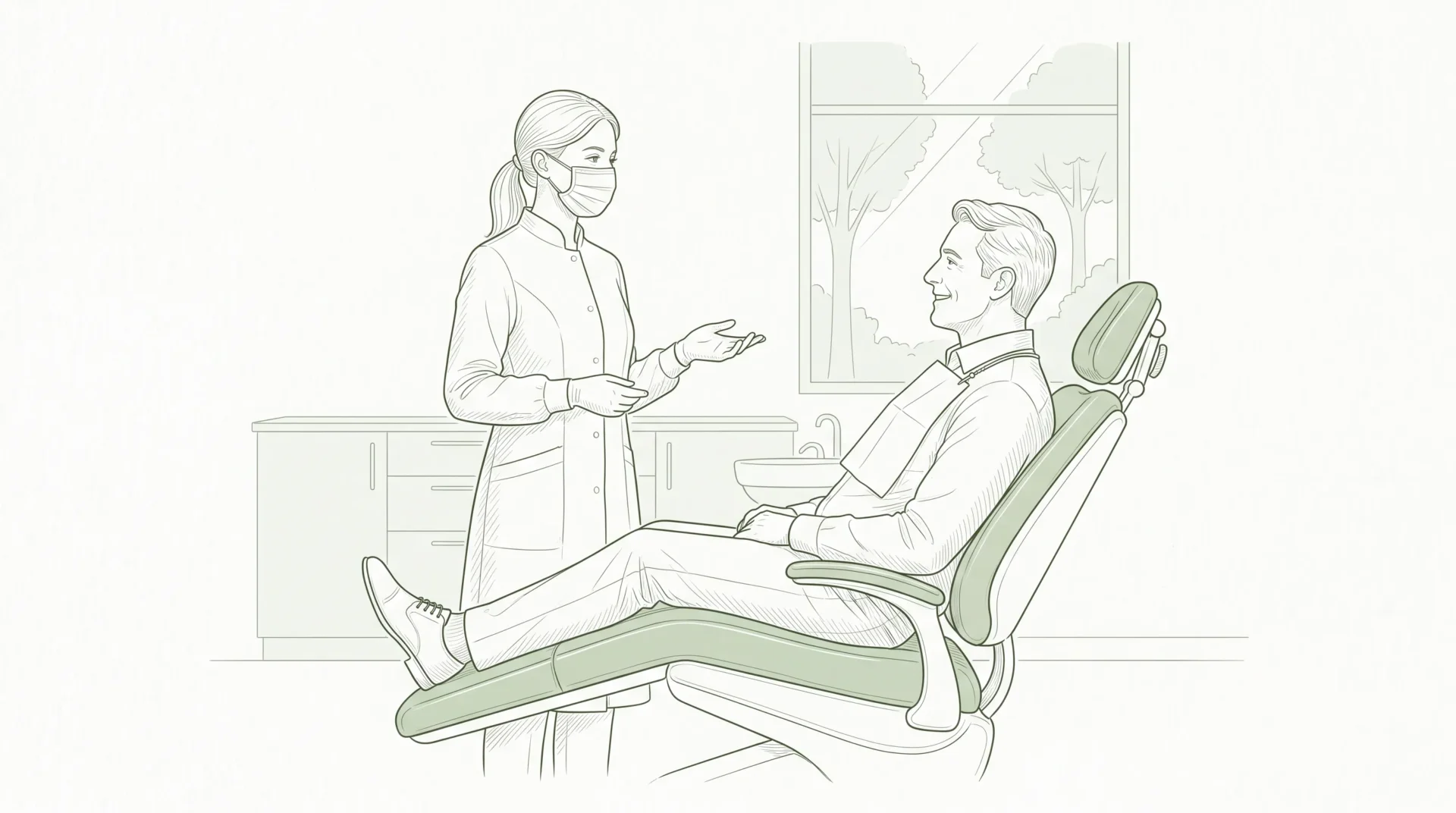
Good communication is one of the clearest signs of a patient-centred clinic. You should feel able to ask questions and receive answers in plain language, without feeling rushed or talked down to.
A dental appointment may include a discussion of your medical history, current symptoms or concerns, an examination and X-rays if clinically indicated. Your dentist may then explain what they have found, what the options are and what may happen if treatment is delayed or not chosen. This should include likely benefits, possible risks, costs and alternatives where relevant.
Useful questions to ask include:
- What are you assessing today?
- Are there different treatment options for this concern?
- What are the potential risks or limitations?
- What might happen if I monitor the issue for now?
- Can I have a written treatment plan or estimate before deciding?
A clear explanation does not need to be complicated. The aim is to give you enough information to make a decision that suits your health needs and circumstances.
A calm approach to nervous or unsure patients
Many people delay dental visits because they feel anxious, embarrassed or unsure what will happen. A considerate clinic should not shame you about your teeth or make assumptions about why you have not attended recently.
If you feel nervous, it can help to tell the clinic when booking or at the start of your appointment. You might prefer a slower explanation, a short first appointment to assess the situation or more time to discuss your options before committing to treatment. Not every concern needs immediate treatment, but some symptoms should be assessed promptly, especially swelling, dental trauma, severe pain, fever or signs of infection.
A supportive dental team should explain what is clinically important without using fear as a motivator. The focus should be on understanding the issue and planning care that is appropriate for you.
Family access and children’s dental visits
If you are choosing a clinic for your household, consider whether the appointment process works for children, adults and older family members. Family dental care often involves a mix of routine check-ups, oral hygiene advice, tooth eruption checks, fillings, gum care, mouthguards and management of dental wear or tooth sensitivity.
Children’s dental visits are often most useful when they are calm, familiar and age appropriate. A clinic should explain what will happen, keep language simple and give parents or carers practical advice about brushing, diet and habits. For some families, arranging appointments at the same clinic can make dental care easier to organise, particularly when school, work and travel time need to be considered.
All About Smiles sees patients at both Ettalong and Kincumber, which may suit different households across the Central Coast depending on where they live, work or attend school.
Location, booking and appointment practicality
Convenience is not the only factor, but it does matter. If a clinic is difficult to reach or appointment times never suit your routine, it becomes harder to maintain regular care.
When looking at a Central Coast dental clinic, think about:
- How easy it is to travel to the clinic from home, work or school
- Whether online booking is available
- Whether the clinic can explain what to do for dental emergencies
- Whether the team can discuss appointment length, likely timing and follow-up needs
- Whether parking, access or public transport matters for your situation
All About Smiles has two clinic locations, Ettalong and Kincumber, and patients can book appointments online. If you are unsure which appointment type to choose, it is reasonable to contact the clinic and explain your main concern.
Costs, payment options and informed consent
Cost is a practical part of healthcare decision-making. A dental clinic should be willing to explain fees, provide an estimate where possible and let you know if costs may change once more information is available.
Some treatments cannot be priced accurately without an examination, X-rays or diagnostic records. For example, a cracked tooth, gum concern or dental implant assessment may require more information before your dentist can explain suitable options. If a clinic gives a very simple quote for a complex issue without assessing you, ask what is included and what might change.
All About Smiles offers flexible payment options, and payment plans may be available depending on the treatment and individual circumstances. Before starting treatment, ask for a clear explanation of what is proposed, why it may be recommended and what alternatives may be considered.
| What to check | Why it matters |
|---|---|
| Written estimate or treatment plan | Helps you understand proposed care and likely fees before deciding |
| Alternatives to the proposed treatment | Supports informed consent and avoids assuming one option suits everyone |
| Risks and limitations | Dental procedures carry potential risks, and outcomes vary between patients |
| Timing and number of appointments | Helps you plan around work, school, travel and recovery if relevant |
| Payment options | Gives you a clearer view of how treatment may fit your budget |
Technology and clinical judgement
Modern dental equipment can support diagnosis, planning and treatment, but technology should not be the main reason to choose a clinic. The more important question is whether a tool is being used appropriately and explained clearly.
For example, X-rays may help a dentist see areas not visible during a visual examination, but they should be taken when clinically indicated. Same-day crown technology may be suitable for some cases, but other situations may require a different approach. Orthodontic records, implant planning or cosmetic consultations may also need additional assessment before a recommendation can be made.
The presence of technology does not remove the need for clinical judgement. A good clinic should explain why a test, scan or treatment is being suggested and how it relates to your oral health.
When a prompt dental appointment may be appropriate
Not every dental issue is an emergency, but some symptoms should be assessed promptly. Contact a dental clinic for advice if you have:
- Facial swelling or swelling around the gum
- Severe toothache that is not settling
- A knocked-out, loose or broken adult tooth
- Dental trauma after a fall, sport or accident
- Bleeding that does not stop after an extraction or injury
- Fever or feeling unwell with a dental infection concern
If symptoms are severe or you are concerned about your general health, seek urgent medical advice. For dental symptoms that are uncomfortable but not urgent, a routine appointment may still be useful to understand the cause and discuss options.
Frequently asked questions
How do I know if a Central Coast dental clinic is reputable? Look for registered dental practitioners, clear communication, realistic treatment information, transparent fee discussions and a professional consent process. You can also check a practitioner’s registration on the AHPRA public register.
Should I choose a dental clinic based only on location? Location is important because it affects how easily you can attend appointments, but it should not be the only factor. Consider communication, services, fees, emergency guidance and whether the clinic can support your ongoing oral health needs.
What services should a family dental clinic offer? Many families look for routine check-ups, cleans, fillings, children’s dentistry, emergency care and advice for different life stages. Some clinics also provide cosmetic and restorative options. Suitability for any treatment depends on an individual assessment.
Can a dental clinic give me an exact cost before I attend? Sometimes a clinic can provide general fee information, but an exact cost may not be possible until your dentist has examined your teeth and gums. Ask for a written estimate or treatment plan before agreeing to treatment.
What should I do if I feel nervous about booking a dental appointment? Let the clinic know when you book or at the start of your visit. You can ask for a clear explanation of what will happen, time to ask questions and a treatment plan that you can consider before deciding.
Considering a dental clinic on the Central Coast?
If you would like to discuss a dental concern, routine check-up or treatment option, you can book an appointment with All About Smiles and choose either the Ettalong or Kincumber location. The team can assess your oral health, explain options that may be suitable and outline fees before treatment proceeds.
Disclaimer
The information provided on this website is for general informational and educational purposes only. It is not intended to replace professional dental advice, diagnosis or treatment. Dental needs and treatment outcomes vary between individuals. Always seek advice from a qualified dental practitioner regarding your specific circumstances before making decisions about your oral health or treatment. A consultation and clinical assessment are required to determine which treatment options may be suitable for you. All dental procedures carry potential risks and benefits, which will be discussed with you before treatment.