
Your First Visit to All About Smiles
28 August 2026
Your first visit to All About Smiles is mainly about getting to know you, understanding your dental concerns and checking what your teeth, gums and mouth may need. Whether you are booking a routine check-up, bringing a child in for their first appointment or looking into cosmetic or restorative options, the first appointment is a starting point rather than a commitment to any particular treatment.
All About Smiles sees patients at both the Ettalong and Kincumber locations on the NSW Central Coast. The information below explains what commonly happens at a first visit, what to bring and how to feel more prepared before you arrive.
What to expect at your first All About Smiles appointment
A first dental visit is usually a combination of conversation, examination and planning. Your dentist needs to understand your oral health history, your general health, your current concerns and what you would like help with.
Depending on your reason for booking, the appointment may include a dental examination, gum check, discussion about symptoms, X-rays if clinically appropriate and advice about next steps. If you are attending because of pain or a broken tooth, the focus may be on assessing the immediate concern before planning any longer-term care.
| Part of the visit | What it may involve | Why it matters |
|---|---|---|
| Welcome and medical history | Basic forms, health questions, medication details and allergies | Your general health can affect dental care and treatment planning |
| Discussion with the dentist | Your concerns, goals, previous dental experiences and questions | Helps the dentist understand what matters to you |
| Dental examination | Checking teeth, gums, bite and soft tissues | Looks for signs of decay, gum inflammation, wear, cracks or other concerns |
| X-rays or other records | Only if recommended for your situation | Helps assess areas that cannot be seen clearly in the mouth |
| Treatment discussion | Options, likely stages, risks, benefits and costs | Supports informed decision-making before any treatment begins |
Before you arrive: what to bring and how to prepare
You do not need to do anything complicated before a first appointment. A few details can make the visit easier and help the dental team give advice that is relevant to your situation.
Helpful things to bring include:
- A list of current medications, including over-the-counter products and supplements
- Details of any allergies or medical conditions
- Previous dental X-rays or treatment notes if you already have them
- Your private health insurance details if you want to discuss claiming options
- A list of questions or concerns you would like to raise during the appointment
If you have a dental appliance, such as a mouthguard, retainer, denture or sleep apnoea device, bring it with you. Your dentist may want to check how it fits or whether it is affecting your teeth, gums or bite.
It can also help to wear comfortable clothing. If you normally wear larger necklaces or dangling earrings, you may prefer to secure them before the appointment so they do not catch while you are reclined. Delicate pieces, including minimalist stainless steel jewellery, are often easier to manage, but it is still sensible to keep accessories simple for dental visits.
Starting with a conversation
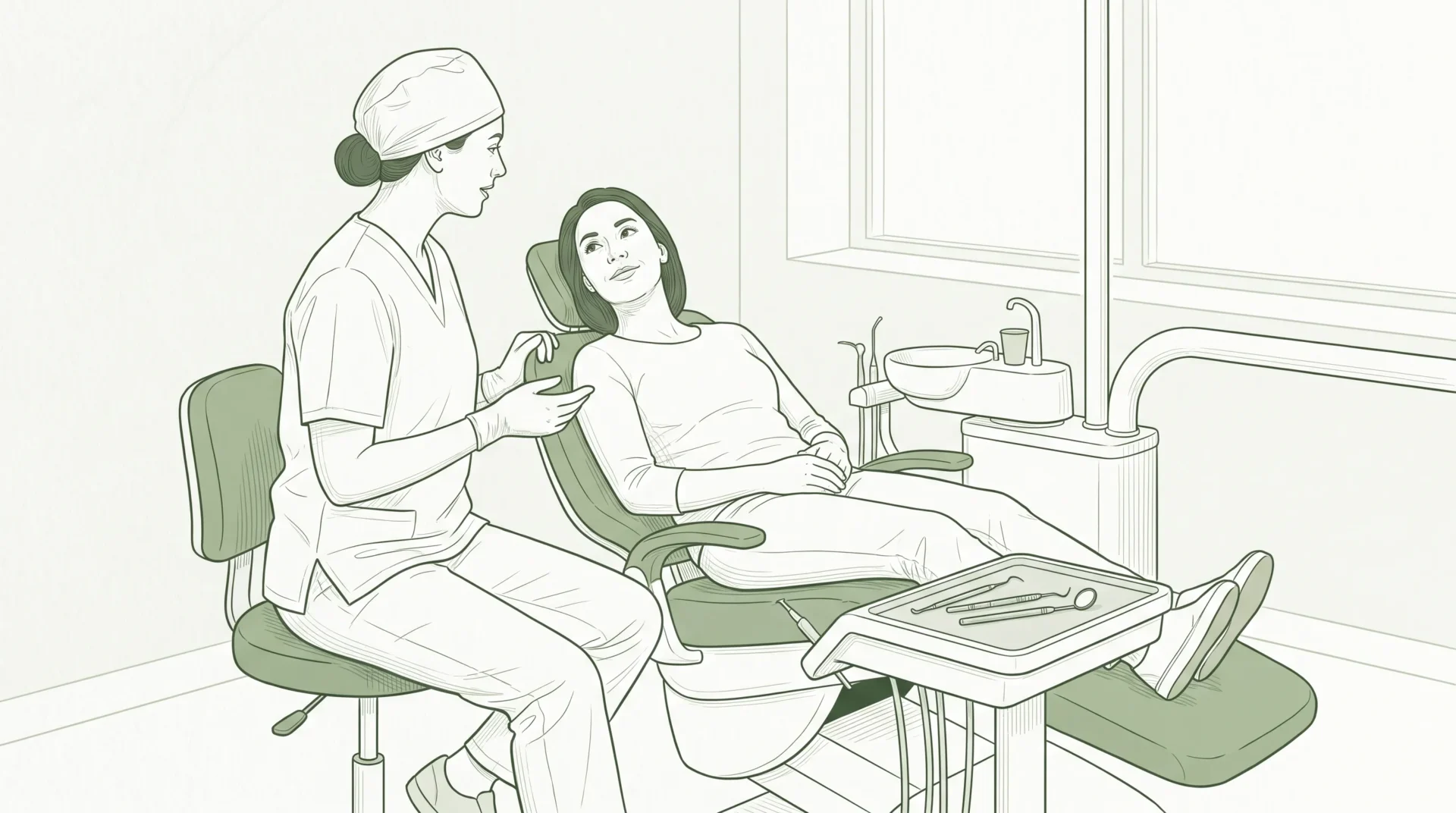
A good first appointment should not feel like a rushed look in the mouth. The conversation at the beginning helps your dentist understand what brought you in.
You may be asked about:
- Toothache, sensitivity, bleeding gums or jaw discomfort
- Previous dental treatment and how you found it
- Grinding, clenching or headaches
- Changes in your bite or tooth appearance
- Your brushing, flossing and diet habits
- Any cosmetic concerns you would like to discuss
This is also the right time to mention if you feel anxious about dental treatment. Many people feel nervous because of a past experience, a strong gag reflex, embarrassment about their teeth or uncertainty about what will happen. Letting the team know early means they can explain things clearly and check in with you before proceeding.
What the dental examination may include
A dental examination is a careful check of your teeth, gums and mouth. Your dentist may look for signs of tooth decay, cracks, worn enamel, gum inflammation, plaque build-up, bite issues and changes in the soft tissues of the mouth.
For many first-time patients, the appointment is about establishing a baseline. This helps your dentist understand what is healthy for you, what needs monitoring and whether any treatment may be worth discussing.
A routine appointment may sit within broader general dental services for everyday oral health, which can include check-ups, cleans, preventive care, fillings and advice on maintaining teeth and gums over time.
X-rays, photos and other checks
Dental X-rays are not automatically needed for every person at every visit. Your dentist may recommend them if they need more information than can be seen during a visual examination, such as between the teeth, under existing fillings or around the roots of teeth.
If X-rays are suggested, you can ask why they are needed and what the dentist is looking for. You should also mention if you are pregnant or think you may be pregnant, as this helps the dentist decide what is appropriate for your circumstances.
In some cases, photographs or digital scans may be used to record tooth position, wear, cracks or cosmetic concerns. These records can help with explanation and treatment planning, but they do not replace a clinical assessment.
Will treatment happen on the first day?
Sometimes, yes. Sometimes, no. It depends on why you booked, what the dentist finds and how much time is available.
If your first visit is a routine check-up, you may have a clean if it is suitable and planned as part of the appointment. If you attend with discomfort, the focus may be on assessing the cause and discussing immediate management options. More involved treatment, such as crowns, veneers, dental implants, orthodontic treatment or root canal therapy, usually needs a proper assessment and planning before anything begins.
No one should feel pressured to start non-urgent treatment without understanding the reason, options, risks, limitations and likely costs. If a procedure is recommended, your dentist can explain what it involves and whether there are alternatives.
First visits for children and families
For children, a first dental visit is often about familiarity, prevention and early guidance. The dentist may check tooth development, brushing habits, diet factors and whether the child is comfortable in the dental setting.
Parents and carers can help by keeping the conversation calm and simple before the appointment. Rather than promising that nothing will feel uncomfortable, it is better to explain that the dentist will count the teeth, look at the gums and talk about how to care for the mouth.
Families may also find it useful to understand how dental needs change with age. All About Smiles has a separate guide on family dental care tips for every stage of life that covers babies, children, teens, adults and older adults.
If your first visit is for pain or a dental emergency
A first visit is sometimes prompted by toothache, a broken tooth, swelling, a lost filling or an injury. In these situations, the appointment may be more focused than a routine check-up.
Your dentist will usually ask about the symptoms, when they started, what makes them better or worse and whether you have noticed swelling, fever or difficulty opening your mouth. They may examine the tooth, check the gums and recommend an X-ray if needed.
Treatment options depend on the cause. For example, a cracked tooth, deep decay, gum infection or bite problem can each require a different approach. Antibiotics are not appropriate for every dental problem, so assessment is important before deciding on care.
If you have facial swelling, trauma, uncontrolled bleeding or difficulty breathing or swallowing, seek urgent medical or dental advice promptly.
Discussing treatment options and costs
After the examination, your dentist can talk through what they found and what the next steps may be. This might involve monitoring, preventive care, a clean, fillings, gum care, cosmetic dentistry, dental implants, root canal therapy, same-day crowns, veneers, orthodontics or another option depending on your needs.
A treatment plan should be based on your oral health, medical history, anatomy, preferences and budget. All dental procedures carry potential risks and benefits, and treatment outcomes and experiences vary between patients. Asking questions is part of making an informed decision.
Useful questions to ask include:
- What are you seeing in my mouth and why does it matter?
- What happens if I choose to monitor this for now?
- What treatment options are available?
- What are the possible risks or limitations?
- How many appointments might be involved?
- What costs should I expect before deciding?
All About Smiles offers flexible payment options, including payment plans. Suitability and details can be discussed with the team before treatment begins, so you understand what applies to your situation.
Feeling nervous about the dentist
Dental anxiety is common and it is nothing to be embarrassed about. Some patients are nervous because they have not been for a while. Others worry about discomfort, sounds, costs or being judged.
A helpful first step is to tell the team what worries you. You can ask for explanations before anything happens, agree on a signal if you need a pause and take time to discuss options before making decisions. If a particular part of dental care is difficult for you, such as X-rays, injections or lying back in the chair, mention it early.
A first visit can be used simply to gather information and rebuild confidence with dental care. Suitability for any treatment should always be assessed individually.
After your first appointment
At the end of the visit, you should have a clearer picture of your oral health and any recommended next steps. You may be given home care advice, a suggested review interval or a treatment plan for further discussion.
If treatment is recommended, take the time you need to understand it. Some people decide quickly when a problem is straightforward, while others prefer to think it over or ask more questions. For non-urgent care, it is reasonable to consider your options before proceeding.
Between visits, the basics still matter: brushing twice daily with fluoride toothpaste, cleaning between the teeth, limiting frequent sugary snacks and drinks and wearing a mouthguard for contact sport can all support oral health. Your dentist or oral health professional can tailor advice to your mouth rather than giving one-size-fits-all instructions.
Frequently asked questions
How long does a first visit to All About Smiles take? Appointment length can vary depending on the reason for your visit, whether X-rays are needed and whether any treatment is planned. When you book, you can ask the reception team what to expect for your appointment type.
Do I need to see a dentist if I do not have tooth pain? Yes, many dental concerns do not cause pain in the early stages. A check-up can help identify changes in teeth, gums or soft tissues before they become more uncomfortable or complex to manage.
Can I book for cosmetic dentistry at my first visit? You can raise cosmetic concerns at your first appointment. Your dentist will still need to assess your teeth, gums, bite and oral health before discussing whether options such as whitening, veneers, bonding, crowns or orthodontics may be suitable.
What if I have not been to the dentist for several years? You can still book an appointment. The first visit is about understanding your current oral health and discussing realistic next steps, not judging you for the time since your last check-up.
Can children attend All About Smiles? Yes, children’s dentistry is part of the care offered at All About Smiles. A child’s first visit may focus on checking development, supporting good habits and helping them become familiar with dental care.
Booking your first visit
If you are ready to organise your first appointment, you can book with All About Smiles at either the Ettalong or Kincumber location. The team can help you choose an appointment type based on whether you need a routine check-up, help with a specific concern or a discussion about possible treatment options.
This article provides general information only and does not replace personalised dental advice. Your dentist can assess your individual circumstances and explain which options may be suitable for you.
Disclaimer
The information provided on this website is for general informational and educational purposes only. It is not intended to replace professional dental advice, diagnosis or treatment. Dental needs and treatment outcomes vary between individuals. Always seek advice from a qualified dental practitioner regarding your specific circumstances before making decisions about your oral health or treatment. A consultation and clinical assessment are required to determine which treatment options may be suitable for you. All dental procedures carry potential risks and benefits, which will be discussed with you before treatment.