
What a Dental Team Does During a Routine Check-up
9 October 2026
During a routine check-up, a dental team reviews your health history, examines your teeth and gums, checks the soft tissues inside your mouth and explains any findings. X-rays, professional cleaning or further treatment may be recommended, but these are not automatically needed at every visit.
The appointment is also a chance to discuss sensitivity, bleeding gums, changes you have noticed or concerns about dental care. Understanding who does what can make the visit feel more familiar and help you ask useful questions.
Who does what in a dental team?
Several people may contribute to your appointment, although staffing and responsibilities differ between practices. You may not meet every role listed below.
| Role | How they may contribute |
|---|---|
| Dentist | Examines your mouth, assesses findings, discusses treatment options and provides care within their scope of practice. |
| Dental assistant | Prepares the treatment area, supports the treating practitioner, handles instruments and assists with infection prevention procedures. |
| Dental hygienist | Provides preventive care, gum assessment and professional cleaning within their training and scope of practice. |
| Oral health therapist | Provides preventive care and certain dental treatments, depending on their qualifications and scope of practice. |
| Reception or administration staff | Helps with appointments, forms, fee enquiries and payment arrangements rather than clinical assessment. |
A dental team coordinates these tasks so that clinical information, practical arrangements and your questions can be addressed by the appropriate person. The practitioner treating you should explain their role if you are unsure.
Dentists, dental hygienists and oral health therapists are registered dental practitioners. You can check a practitioner's registration through AHPRA's public register. Dental assistants and reception staff have different responsibilities and do not replace a clinical assessment.
Before the examination: updating your health information
The appointment usually begins with a conversation about your dental concerns and any changes since your last visit. Even if you attend regularly, an updated medical history matters because health conditions and medicines can affect dental care.
Useful information includes new prescriptions, allergies, pregnancy, recent surgery and any previous difficulties with dental treatment. Mention supplements and non-prescription medicines too. Do not stop a prescribed medicine because of an upcoming appointment unless your treating clinician advises you to do so.
Describe symptoms as specifically as you can: when they started, where they occur and whether eating, drinking or biting brings them on. Our guide to preparing for a dental consultation explains what information to bring.
Your dental team also needs to know about anxiety, a strong gag reflex, communication needs or difficulty reclining. You can discuss a pause signal before the examination begins.
What happens while your mouth is examined?
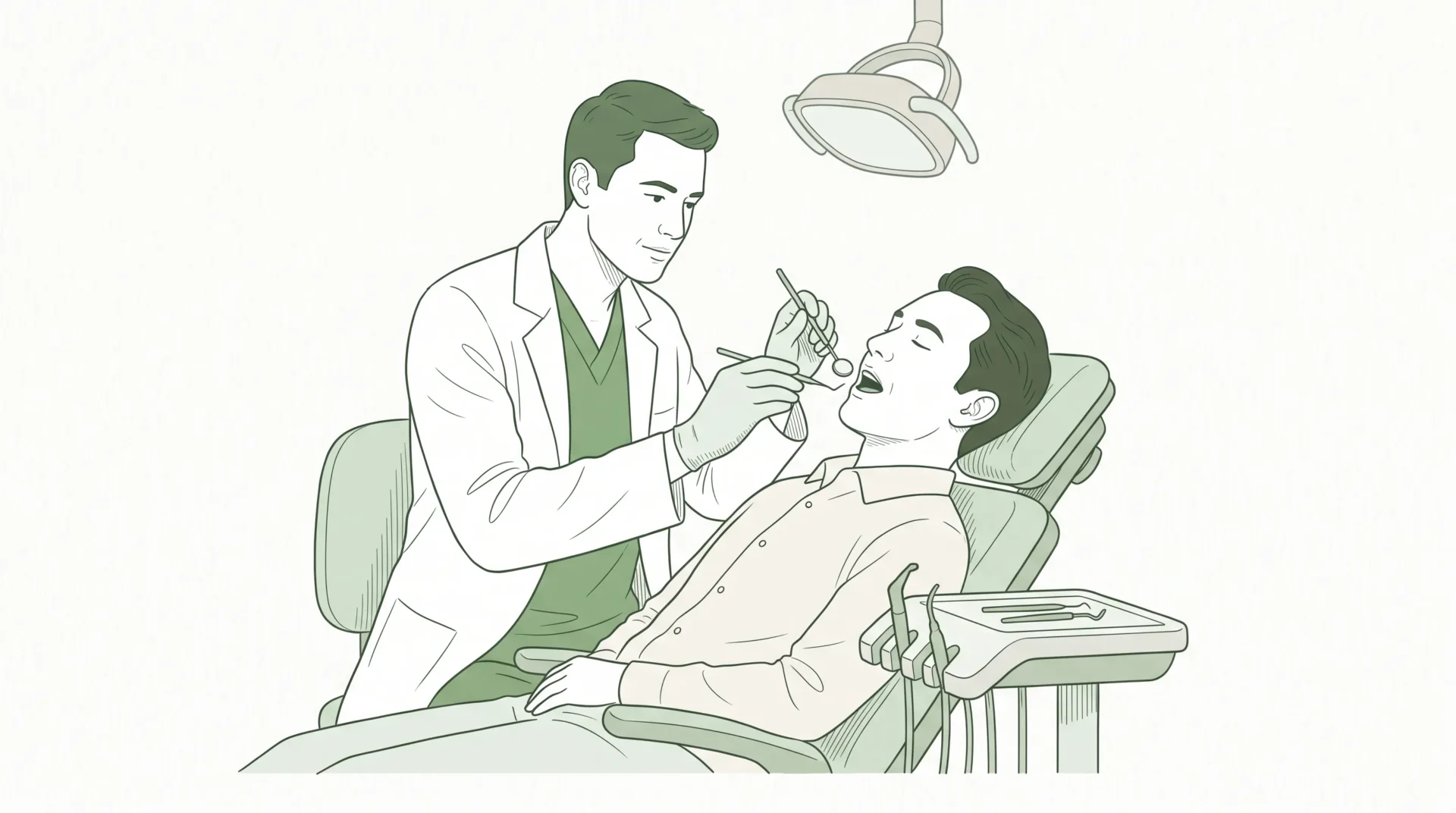
A dentist uses a light, a small mirror and appropriate examination instruments to assess your mouth. They may gently dry teeth to see surfaces more clearly and compare their findings with previous records.
Teeth, existing dental work and your bite
The examination looks for signs of tooth decay, wear, visible cracks and problems around existing fillings or crowns. Your dentist may also check how your teeth meet when you bite together and ask about jaw discomfort or clenching.
Not every finding needs treatment. Some changes may be monitored, while others need further investigation before a recommendation can be made.
Gums and the soft tissues inside your mouth
Gums are checked for inflammation, bleeding and other signs of disease. Measurements around teeth may be taken with a fine instrument to assess the spaces between teeth and gums. Our article on how dentists check for early signs of gum problems explains this assessment in more detail.
The tongue, cheeks, lips and other soft tissues are also examined for changes such as ulcers, unusual patches or swellings. Tell the dentist about anything that has persisted or feels different.
The dental team records relevant findings to support care planning and comparison at future visits. An examination cannot identify every problem, so additional tests or a separate appointment may sometimes be needed.
Are X-rays and cleaning part of every check-up?
A check-up, an X-ray and a professional clean are different parts of dental care. They may happen during the same appointment, but each should have a clinical reason.
When dental X-rays may be useful
X-rays can help assess areas that cannot be seen directly, including between teeth and beneath existing dental work. Whether they are appropriate depends on symptoms, examination findings, previous images and your risk of dental disease.
They involve exposure to a small amount of ionising radiation. Your dentist should consider whether the expected diagnostic benefit justifies taking them. Let the practitioner know if you are pregnant or think you may be pregnant so this can be considered in planning your care.
When professional cleaning may be recommended
Cleaning removes plaque and hardened deposits, called calculus, that cannot be removed adequately with a toothbrush. Depending on your gum health and the amount of build-up, cleaning may be completed during the visit or arranged separately.
Some people experience temporary sensitivity or gum tenderness afterwards. Ask your dental team whether cleaning is recommended for you, what it involves and whether any additional appointments or fees apply.
How findings and treatment choices are explained
After the examination, the dentist should explain what was found in language you understand. If images or photographs are available, they may be used to help show the area being discussed.
A useful explanation distinguishes between something that needs prompt attention, something that can be monitored and an optional treatment. Appearance alone does not mean a tooth needs treatment.
Before agreeing to a procedure, you can ask:
- What is the finding, and how certain is the diagnosis?
- What are the potential benefits, risks and limitations of treatment?
- Are there alternatives, including monitoring where clinically appropriate?
- What could happen if I delay or decline treatment?
- What are the expected fees and appointment requirements?
Your dental team should give you an opportunity to ask questions before you consent to care. All dental procedures carry potential risks and benefits, and suitability depends on your oral health, medical history and individual circumstances. You can ask for clarification or time to consider a non-urgent recommendation.
What happens after the appointment?
The next steps may be preventive advice, a review appointment, further assessment or a treatment plan. A routine check-up does not mean you will necessarily need a filling or another procedure.
Advice should relate to your own findings. For example, the dentist may demonstrate a way to clean between particular teeth or discuss habits contributing to tooth wear. The Australian Dental Association's patient oral health resources provide useful background on everyday care.
The dental team can explain the recommended timing of your next check-up, which should reflect your individual needs rather than a fixed schedule for everyone. Our overview of general dental services for everyday oral health explains how examinations fit alongside preventive and restorative care.
Do not wait for a routine visit if you develop persistent tooth pain, swelling or a damaged tooth. Seek prompt advice. Difficulty breathing or swallowing with facial or mouth swelling requires urgent medical assessment; call 000 if breathing is affected.
Frequently asked questions
Does a routine check-up hurt? Experiences vary. An examination is usually less involved than treatment, but sensitive teeth or inflamed gums can make parts uncomfortable. Tell the practitioner what you are feeling so they can discuss adjustments or pauses.
Do I need X-rays every time? No. Your dentist should recommend X-rays according to your symptoms, examination findings, previous images and risk of disease. You can ask what information an image is expected to provide.
Can I have a check-up without agreeing to treatment straight away? Yes. An examination helps establish what care, if any, may be appropriate. You can discuss options before deciding. If a finding needs prompt attention, the dentist should explain why and what delaying care could mean.
What if it has been years since my last appointment? Tell the practice when you book and mention any current symptoms. The appointment provides an opportunity to assess your current oral health and discuss priorities without assuming that a particular treatment is needed.
Discuss your next check-up with All About Smiles
All About Smiles sees patients at both its Ettalong and Kincumber locations on the NSW Central Coast. If you would like to arrange a routine check-up, you can book an appointment with All About Smiles and let the dental team know about any concerns or support you may need.
Disclaimer
The information provided on this website is for general informational and educational purposes only. It is not intended to replace professional dental advice, diagnosis or treatment. Dental needs and treatment outcomes vary between individuals. Always seek advice from a qualified dental practitioner regarding your specific circumstances before making decisions about your oral health or treatment. A consultation and clinical assessment are required to determine which treatment options may be suitable for you. All dental procedures carry potential risks and benefits, which will be discussed with you before treatment.