
How to Prepare for a Dental Consultation
7 September 2026
Dental consultations are most useful when your dentist has a clear picture of what is happening, what you are hoping to understand and any health factors that may affect your care. A little preparation can make the appointment feel more organised, particularly if you are seeing a dentist for the first time, coming in with a concern or wanting to discuss treatment options.
At All About Smiles, patients are seen at both the Ettalong and Kincumber locations on the Central Coast. Whether your visit is for a routine check, a specific dental issue or a conversation about cosmetic treatment, the same basic preparation applies.
Why preparation matters for dental consultations
A dental consultation is a structured appointment where your dentist can assess your mouth, ask about your concerns and talk through suitable next steps. It is not just about looking at teeth. Your gums, bite, jaw joints, medical history, medications and personal preferences may all be relevant.
Preparing beforehand helps you explain symptoms more clearly and remember questions you wanted to ask. It may also help your dentist understand whether extra care is needed, such as if you have a medical condition, take blood-thinning medication, are pregnant, feel anxious about dental treatment or have had a past reaction to medication.
Good preparation does not mean you need to diagnose yourself. It simply means arriving with the information your dentist may need to assess your situation properly.
What to bring to your appointment
For most dental consultations, the practical items are straightforward. If you are unsure what applies to you, it is reasonable to ask when booking.
| What to bring | Why it may help |
|---|---|
| A list of current medicines and supplements | Some medicines can affect dental treatment planning, bleeding, dry mouth or healing |
| Details of allergies or past reactions | This helps the dental team consider suitable materials, medications or local anaesthetics |
| Relevant medical history | Conditions such as diabetes, heart conditions, osteoporosis or immune concerns may affect care decisions |
| Private health insurance details, if applicable | This may help with claims or understanding possible out-of-pocket costs |
| Previous dental records or X-rays, if available | These can sometimes help your dentist compare changes over time |
| A list of questions | It is easy to forget questions once the appointment begins |
| A mouthguard, retainer, denture or aligner, if you use one | Your dentist may want to assess fit, wear or hygiene |
Do not stop taking prescribed medicines before a dental appointment unless your doctor or dentist has specifically told you to do so. If a medication is relevant to your dental care, your dentist can discuss the safest way to proceed or, where needed, communicate with your GP or relevant medical practitioner.
If this is your first appointment with the practice, you may also find it useful to read about what may happen at your first visit to All About Smiles. That guide explains the general flow of a first appointment without assuming you already know the process.
Write down your symptoms before you arrive
If you are attending because something feels different, write down the details while they are fresh. Dental symptoms can come and go, and patterns matter.
Try to note when the issue started, where you feel it, what makes it better or worse and whether it is affecting eating, sleeping or brushing. For example, sensitivity that happens only with cold drinks may suggest a different problem from discomfort when biting down. Bleeding gums, mouth ulcers, a chipped tooth, jaw clicking, swelling or changes around wisdom teeth are also worth mentioning.
Photos can sometimes be useful if swelling, a mouth sore or a broken tooth changes before your appointment. They do not replace a clinical assessment, but they may help your dentist understand what you noticed at home.
It is also helpful to mention any recent events that may be connected, such as a knock to the mouth, a lost filling, a new medication, increased stress, recent illness, changes in brushing habits or starting orthodontic treatment.
Be clear about your goals and concerns
Dental consultations are not only for pain or problems. Some people book because they want to understand preventive care, replace a missing tooth, discuss a worn filling or ask about cosmetic options. Others may simply want to re-establish a routine after a long break from dental visits.
Before the appointment, think about what you would like to get out of the consultation. You might want to know:
- Whether a symptom needs treatment or monitoring
- What options may be available for a broken, worn or missing tooth
- Whether a cosmetic concern can be assessed safely
- How to improve brushing, flossing or gum health
- What treatment timing, maintenance or costs may involve
- Whether there are alternatives to a suggested treatment
If your concern is cosmetic, your dentist will usually need to assess oral health first. Teeth whitening, veneers, crowns, bonding and orthodontic options are not suitable for every person or every situation. You can prepare for that conversation by reading about cosmetic dental services to discuss with your dentist, then bringing your questions to the consultation.
What may happen during the consultation
The exact appointment will depend on why you are attending. A consultation for a toothache will feel different from a routine examination or a cosmetic discussion. In general, your dentist may begin by asking what brought you in, reviewing your medical history and discussing any symptoms or goals.
A clinical examination may include checking your teeth, gums, soft tissues, bite and jaw movement. If you have a particular concern, the dentist may focus on that area. X-rays may be recommended when they are clinically useful, such as to assess areas not visible in the mouth, but they are not taken for every person in every situation.
After the assessment, your dentist can explain what they have found in everyday language. If treatment is recommended, the discussion should include why it may be suggested, what alternatives may exist, possible risks or limitations and what could happen if the issue is left untreated. All dental procedures carry potential benefits and risks, and suitability depends on factors such as your oral health, medical history, anatomy and preferences.
If several options are possible, you do not need to decide immediately unless the situation genuinely requires prompt care. Many patients prefer to take time to consider information, discuss costs or ask follow-up questions.
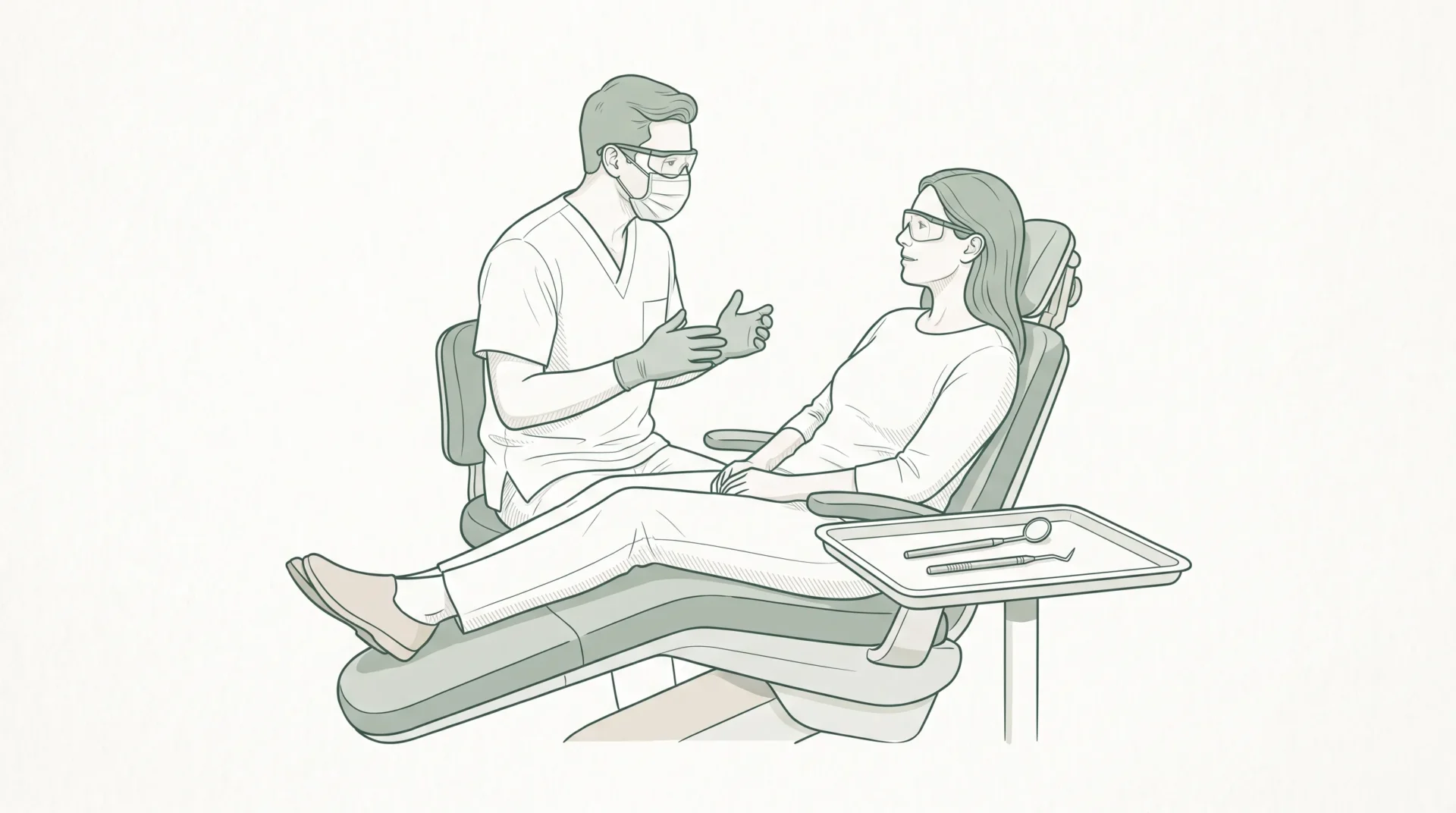
Questions worth asking your dentist
It can be difficult to know what to ask during a dental consultation, especially if you feel nervous or the information is new. Bringing written questions can make the appointment easier to follow.
Useful questions may include:
- What do you think may be causing this concern?
- Are there different treatment options, including monitoring?
- What are the possible benefits, risks and limitations of each option?
- Is this treatment urgent or can it be planned over time?
- How many appointments may be involved?
- What maintenance would be needed afterwards?
- What costs should I understand before deciding?
- Are there any changes I can make at home to support my oral health?
If you do not understand a term, ask for it to be explained. Good dental decision-making depends on clear information, not technical language. You can also ask for written information or a treatment plan if that would help you compare options later.
If you feel anxious about the appointment
Feeling uneasy before a dental visit is common. Some people worry about discomfort, the sound of dental equipment, cost, being judged or not knowing what will happen. You do not need to hide those concerns.
When booking or at the start of your consultation, let the team know if you feel nervous. Your dentist can talk through what is planned, pause when needed and explain which parts of the appointment are only an examination or discussion. If you prefer more explanation before anything is done, say so early.
It may also help to book at a time of day when you are less rushed, avoid scheduling immediately before an important commitment and bring a support person if appropriate. If you have had a difficult dental experience in the past, sharing the parts that were hardest for you can help your dentist plan the appointment more thoughtfully.
Preparing a child for a dental consultation
For children, preparation should be simple and reassuring. Avoid describing the appointment in a way that creates fear, but also avoid promising that nothing will feel strange. A calm explanation such as “the dentist will count your teeth and check how they are growing” is often enough for younger children.
Bring any details that may help the dentist, such as thumb sucking, dummy use, snoring, tooth grinding, sports injuries, brushing difficulties or concerns about adult teeth coming through. If your child has a favourite comfort item, it may be useful to bring it along.
Parents and carers can also prepare by thinking about diet, brushing habits and fluoride toothpaste use. The Australian Dental Association’s patient information site, Teeth.org.au, provides general oral health information that may be useful for families, including everyday prevention topics.
What not to do before a dental consultation
There are a few things that can make an appointment harder than it needs to be. Try not to mask symptoms so completely that you cannot describe them, unless you need pain relief to function. If you do take pain relief, write down what you took and when.
Avoid using sharp tools, glue or unverified home remedies on teeth, gums, crowns, dentures or aligners. These can irritate tissues, damage dental work or make assessment more difficult. If a crown, filling or veneer has come loose, keep it in a safe container and bring it with you rather than trying to reattach it yourself.
If you are attending for tooth whitening advice or cosmetic treatment, avoid making major changes just before the consultation, such as starting a new whitening product or abrasive brushing routine. Your dentist can assess your teeth and gums first, then discuss whether a particular option may be suitable.
When to seek more urgent advice
Some dental concerns should be assessed promptly. Contact a dental clinic for advice if you have facial swelling, significant tooth pain, a knocked-out adult tooth, dental trauma, uncontrolled bleeding after an injury or signs of infection such as fever with dental swelling.
If swelling affects breathing or swallowing, or you feel seriously unwell, seek urgent medical care. In Australia, call Triple Zero (000) in a medical emergency.
For less urgent concerns, booking a dental consultation is still worthwhile if something has changed or you are unsure what to do. Early assessment may make it easier to understand your options, but treatment recommendations should always be based on your individual circumstances.
Preparing for a consultation at All About Smiles
If you are booking with All About Smiles, you can choose from the Ettalong or Kincumber locations. The team sees patients for general, emergency and cosmetic dental concerns, and can discuss treatment planning and payment options where relevant.
Before your visit, gather your medication list, health details, questions and any dental appliances you use. If the appointment is for a specific concern, write down the symptom timeline. If the appointment is for treatment planning, think about your priorities, such as function, appearance, timing, maintenance or budget.
A consultation is also a good time to ask how preventive care fits into your situation. For general Australian information about oral health and dental care, Healthdirect is a useful public health resource.
Frequently Asked Questions
How early should I arrive for a dental consultation? If you are a new patient or need to update medical details, arriving a little early can give you time to complete forms without feeling rushed. Ask the clinic when booking if you are unsure.
Should I brush my teeth before a dental consultation? Yes, brushing beforehand is helpful if practical, but do not worry if you are coming from work, school or an urgent situation. Your dentist can still assess your teeth and gums.
Can I eat before a dental consultation? For most standard consultations, eating beforehand is usually fine. If you have been given specific instructions for a procedure, sedation or a surgical appointment, follow those instructions instead.
Will I need X-rays at my appointment? Not always. X-rays may be recommended when they are clinically useful for diagnosis or treatment planning. Your dentist should explain why they are suggested and what information they may provide.
Can I bring someone with me? In many situations, bringing a support person is reasonable, especially for children, anxious patients or people who need help with communication or mobility. It is best to mention this when booking.
What if I have not seen a dentist for years? You can still book a consultation. Let your dentist know about any concerns, past experiences and what you would like to understand. The appointment can focus on assessing your current oral health and discussing suitable next steps.
To discuss a dental concern or plan an appointment, you can book with All About Smiles at either the Ettalong or Kincumber location. Your dentist can assess your individual situation and explain options that may be suitable for your needs.
Disclaimer
The information provided on this website is for general informational and educational purposes only. It is not intended to replace professional dental advice, diagnosis or treatment. Dental needs and treatment outcomes vary between individuals. Always seek advice from a qualified dental practitioner regarding your specific circumstances before making decisions about your oral health or treatment. A consultation and clinical assessment are required to determine which treatment options may be suitable for you. All dental procedures carry potential risks and benefits, which will be discussed with you before treatment.