
Dental Implants or Veneers: Which May Suit You?
4 September 2026
If you have searched for “dental implants and veneers near me”, the most useful starting point is this: implants and veneers usually solve different dental problems. A dental implant is generally considered when a tooth is missing or cannot be predictably restored. A veneer is used to change the visible front surface of an existing tooth.
That difference matters. If a tooth is missing, a veneer cannot replace it. If a tooth is healthy but you dislike its colour, shape or minor unevenness, an implant would usually be far more treatment than the situation calls for. The right option depends on your oral health, the tooth involved, your bite, your medical history and what you want to change.
When you search for dental implants and veneers near me, what are you really comparing?
Many people compare implants and veneers because both can change the appearance of a smile. In practice, your dentist is usually asking a more specific question: are we replacing a tooth, restoring a damaged tooth or improving the appearance of a tooth that is already structurally sound?
A consultation should not start with a pre-decided treatment. It should start with an assessment of your teeth, gums and bite, followed by a discussion about realistic options. At All About Smiles, patients can discuss general and cosmetic dental concerns at the Ettalong or Kincumber locations, depending on which is more convenient.
What dental implants are generally used for
A dental implant is a small fixture placed into the jawbone to support a replacement tooth, such as a crown. It is designed to act as an artificial tooth root. Once the implant has healed and is stable, a connector and crown may be attached, depending on the treatment plan.
Implants may be considered when:
- One or more teeth are missing
- A tooth is too damaged to be restored in a predictable way
- A patient wants to discuss fixed tooth replacement options
- A denture or bridge alternative may be appropriate
Implant treatment involves a surgical stage. Suitability depends on factors such as bone volume, gum health, oral hygiene, smoking status, diabetes control, medications and overall health. Some patients may need additional procedures before an implant can be considered. Others may be better suited to a bridge, denture or another restorative option.
Dental implants can be a long-term tooth replacement option for suitable patients, but they are not maintenance-free. The surrounding gums and supporting tissues need regular care. Implant-related complications, such as inflammation, infection, looseness or mechanical issues with the crown, can occur.
What veneers are generally used for
A veneer is a thin layer of material bonded to the front of a tooth. Veneers are most often used on visible front teeth to adjust appearance. They may be made from porcelain or composite resin, depending on the case.
Veneers may be discussed for concerns such as:
- Discolouration that does not respond well to whitening
- Minor chips or worn edges
- Small gaps between teeth
- Tooth shape or proportion concerns
- Mild unevenness where orthodontic treatment is not required or not preferred
Veneers need a natural tooth underneath. They do not replace missing teeth and they do not strengthen a tooth in the same way a full crown may be used for a heavily broken-down tooth. If there is decay, gum disease, heavy grinding or significant bite pressure, those issues usually need to be assessed before cosmetic treatment is planned.
If you are specifically researching veneers, the All About Smiles guide to what to know before considering veneers on the Central Coast explains porcelain and composite options in more detail.
Dental implants vs veneers: key differences
The simplest way to compare the two is to look at the problem each treatment is intended to address.
| Question | Dental implant | Veneer |
|---|---|---|
| Main purpose | Replaces a missing tooth or supports a replacement tooth | Changes the front surface of an existing tooth |
| Tooth required? | No natural tooth is needed in that space, but enough supporting bone and healthy tissue are important | Yes, a suitable natural tooth is needed |
| Common area | Can be used in different parts of the mouth depending on suitability | Usually used on visible front teeth |
| Procedure type | Includes a surgical component | Usually involves bonding material to the tooth surface |
| Treatment time | Often staged over several appointments and healing periods | Often shorter than implant treatment, though timing varies |
| Key limitations | Requires adequate bone, healing capacity and ongoing maintenance | Cannot replace a missing tooth and may involve removing some enamel |
| Alternatives to discuss | Bridge, denture or no replacement in selected cases | Whitening, bonding, orthodontics, crowns or no cosmetic treatment |
Neither option is automatically better. They are different tools for different situations.
What an appointment may involve
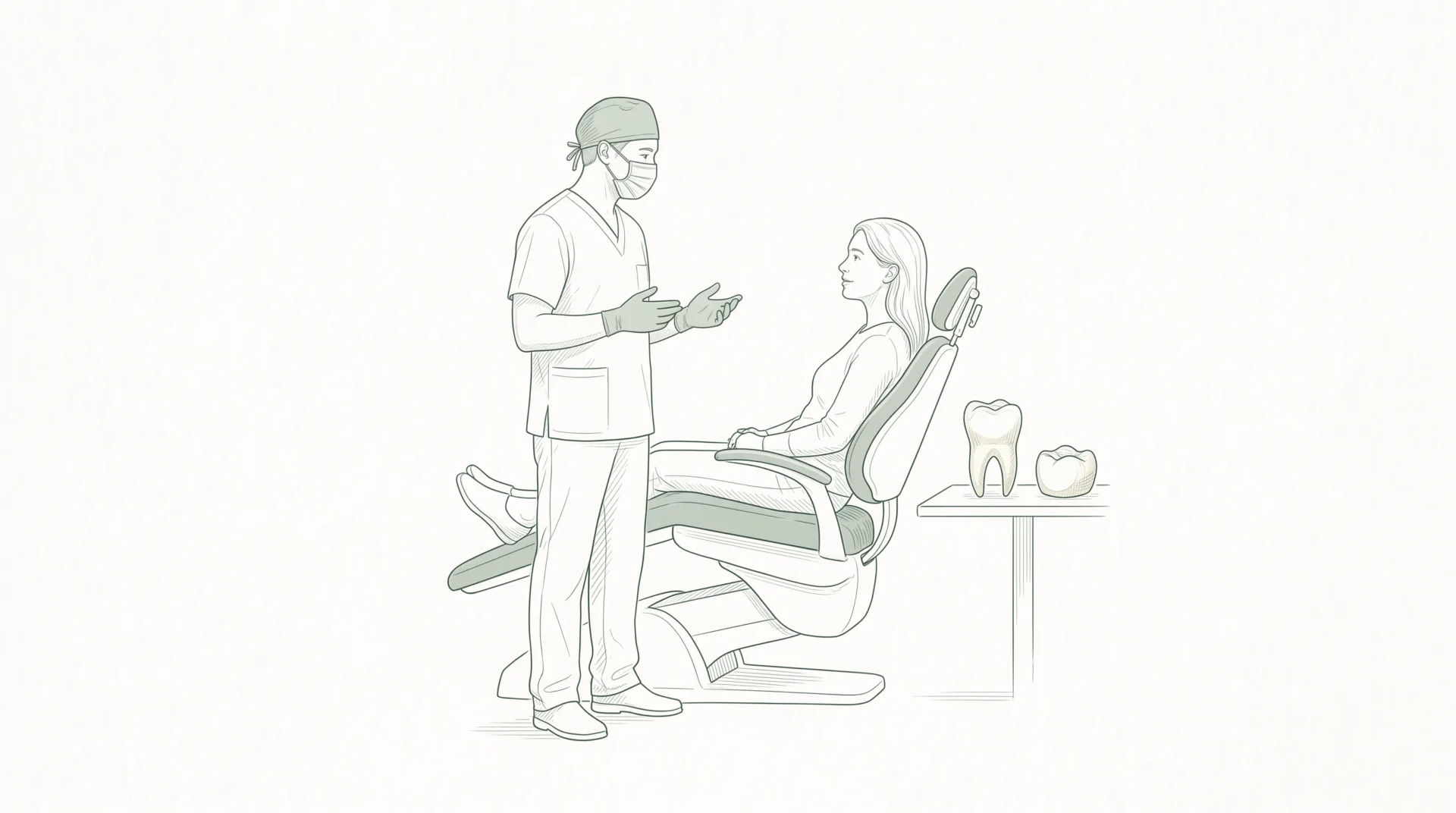
A dentist cannot confirm whether implants or veneers may suit you from photos alone. A proper appointment gives the dentist a chance to assess the foundations of treatment, not just the appearance of the teeth.
Your appointment may include:
- A conversation about your concerns: This may include which tooth or teeth bother you, whether the concern is functional or cosmetic and what outcome you are hoping for.
- A review of your dental and medical history: Medical conditions, medications, smoking, previous dental treatment and past complications can all affect planning.
- An examination of your teeth, gums and bite: Gum health, tooth cracks, decay, enamel thickness, grinding and jaw movement can influence suitability.
- X-rays or scans if needed: Imaging may be recommended to assess roots, bone levels or existing dental work.
- A discussion of options and limitations: Your dentist should explain possible benefits, risks, maintenance needs, fees and alternatives before you decide.
For some patients, the first step is not an implant or veneer at all. It may be treating gum inflammation, managing decay, replacing an old filling, improving home care or taking time to compare options.
Benefits, limitations and risks to discuss
All dental procedures carry potential benefits and risks. The details vary between patients, so your dentist should tailor the conversation to your mouth rather than relying on a generic treatment list.
Dental implant considerations
A dental implant may help restore a fixed replacement tooth in a gap, which can support chewing and appearance for suitable patients. It can also avoid preparing neighbouring teeth in some cases, compared with certain bridge designs.
Limitations and risks can include surgical discomfort during healing, infection, implant failure, gum recession, nerve or sinus-related complications depending on the site, crown wear or fracture and the need for long-term maintenance. Healing times vary. Some patients may need referral or additional planning if the case is complex.
Veneer considerations
Veneers may help improve the colour, shape or contour of selected teeth. Porcelain veneers and composite veneers have different preparation, cost, repair and maintenance considerations.
Limitations and risks can include tooth sensitivity, chipping, debonding, staining of composite material, gum irritation, colour mismatch over time and the need for replacement in the future. Some veneer treatment involves removing enamel, which may be irreversible. A veneer also will not correct all alignment, bite or gum concerns.
Shared planning considerations
Both implants and veneers require healthy foundations. Gum disease, active decay or an unstable bite can affect treatment outcomes. If you grind or clench your teeth, your dentist may discuss protective options or alternative treatment choices.
It is also worth asking how the proposed treatment will be maintained. Good home care, regular dental reviews and realistic expectations are part of the decision.
Could another option suit you better?
It is common to arrive at a dental appointment asking about one treatment, then learn that another option may better match the problem. That does not mean your original question was wrong. It simply means teeth, gums and bite forces need to be considered together.
Alternatives your dentist may discuss include whitening, bonding, crowns, orthodontic treatment, bridges, dentures or monitoring the tooth for now. For example, a small chip on a front tooth may not need a veneer. A heavily filled tooth may need a crown rather than a veneer. A missing tooth may be suitable for an implant, but a bridge or denture may also be considered depending on your circumstances.
For a broader overview, All About Smiles has an article on understanding cosmetic dental treatment options that explains how common treatments differ and why oral health is usually assessed first.
Choosing a local dentist for this decision
A local search can be useful when you want care close to home, but search rankings alone do not tell you whether a treatment is clinically suitable. Dental websites, ads and map listings are often shaped by healthcare marketing and local SEO, so it is sensible to treat online visibility as a starting point rather than a clinical recommendation.
When comparing dentists, look for clear information about assessment, consent, treatment options, risks, expected maintenance and costs. You can also check that the practitioner is registered with the Dental Board of Australia through the public register if you wish.
A good consultation should leave you with a clearer understanding of your choices, including the option not to proceed with cosmetic or implant treatment. If you are weighing up who to see, the All About Smiles article on how to choose a cosmetic dentist on the Central Coast covers practical questions to ask before starting treatment.
Questions to ask before deciding
Before choosing between an implant, veneer or another option, consider asking your dentist:
- What problem are we trying to solve first?
- Are my gums and remaining teeth healthy enough for this treatment?
- What are the main risks in my case?
- What alternatives are available, including doing nothing for now?
- How many appointments may be involved?
- What maintenance will I need after treatment?
- What fees, payment options and future replacement costs should I consider?
These questions can help you make a decision based on function, health, appearance and practicality, not just the name of a procedure.
Frequently Asked Questions
Are dental implants better than veneers? Not generally. They are used for different purposes. An implant replaces a missing tooth or supports a replacement tooth, while a veneer changes the visible surface of an existing tooth. Suitability depends on a dental assessment.
Can veneers replace missing teeth? No. Veneers need natural teeth to bond to. If a tooth is missing, your dentist may discuss options such as an implant, bridge or denture depending on your oral health and goals.
Can I have veneers if my teeth are crooked? Sometimes veneers may be considered for mild shape or spacing concerns, but they are not a substitute for orthodontic treatment in every case. Your bite, tooth position and enamel need to be assessed.
How long does implant treatment take compared with veneers? Implant treatment is often staged and may involve healing time after surgery. Veneer treatment is often shorter, but timing varies depending on the material used, the number of teeth involved and any dental health issues that need attention first.
Do implants or veneers hurt? Your dentist can discuss anaesthetic and comfort measures for your situation. Some discomfort or sensitivity may occur after dental procedures, particularly after surgery or tooth preparation. Experiences vary between patients.
Can I get an implant or veneer if I have gum disease? Active gum disease usually needs to be assessed and managed before implant or veneer treatment is planned. Healthy gums are important for both options.
Discussing your options with All About Smiles
If you are unsure whether an implant, veneer or another treatment may be appropriate, a dental appointment is the right place to start. The team at All About Smiles can assess your teeth, gums and bite, explain suitable options and discuss payment choices where relevant.
You can book with All About Smiles at either the Ettalong or Kincumber location to talk through your concerns and make an informed decision based on your individual needs.
Disclaimer
The information provided on this website is for general informational and educational purposes only. It is not intended to replace professional dental advice, diagnosis or treatment. Dental needs and treatment outcomes vary between individuals. Always seek advice from a qualified dental practitioner regarding your specific circumstances before making decisions about your oral health or treatment. A consultation and clinical assessment are required to determine which treatment options may be suitable for you. All dental procedures carry potential risks and benefits, which will be discussed with you before treatment.