
Choosing a Family Dental Centre for a Child With Sensory Needs
26 October 2026
If you are searching for a family dental center for a child with sensory needs, look for a team that will discuss your child’s triggers, explain what can realistically be adjusted and agree on a manageable first visit. A welcoming manner matters, but so does a clear plan for what happens if your child becomes overwhelmed. For Central Coast families, choosing a practice involves more than finding a convenient appointment time.
Understand what makes dental visits difficult for your child
Dental appointments bring together unfamiliar sounds, bright lights, strong tastes and close contact around the mouth. Some children find these sensations uncomfortable or overwhelming. Others struggle with waiting, unexpected changes or being asked to recline.
Sensory needs can occur alongside autism, ADHD or other developmental differences, but a diagnosis is not needed to discuss adjustments. Your child’s individual preferences are more useful than assumptions based on a diagnostic label.
Before contacting a practice, note what your child finds difficult and what helps. For example, they may tolerate toothbrushing but dislike mint flavours, or feel comfortable sitting upright but become distressed when the chair moves.
Also describe how your child communicates discomfort. Turning away, becoming very quiet or pushing something aside may be meaningful signals. Distress should not automatically be treated as a behavioural issue: pain, uncertainty and communication difficulties may also need consideration.
What to ask a family dental center about sensory needs
Ask specific questions before booking rather than relying on descriptions such as “child-friendly” or “gentle”. A useful response explains what the practice can offer, what needs advance planning and where its limits are.
| Question to ask | What a useful answer should clarify |
|---|---|
| Can we share a sensory and communication profile beforehand? | How the information reaches the treating dental team |
| Can you explain the appointment sequence in advance? | Which parts are predictable and what might change |
| Are there appointment times with less waiting or activity? | What can reasonably be arranged, without guaranteeing a quiet environment |
| Can lighting, chair position or equipment use be adjusted? | Which changes may be possible without compromising safe care |
| What happens if my child needs to stop? | How the team pauses safely and decides what to do next |
| When would you recommend a referral? | How the team recognises needs beyond its facilities or experience |
No practice can remove every sound, smell or sensation. Dental lighting and equipment also have safety functions. The aim is a workable, individual plan, not a promise that nothing will feel unfamiliar.
General principles such as clear explanations, agreed pauses and ongoing consent are also discussed in our guide to dental care for anxious patients. Sensory needs still require their own discussion rather than being treated as anxiety alone.
Agree on a practical plan before the appointment
Before booking with a family dental center, explain your child’s current dental concern as well as their sensory needs. A child with toothache needs a different plan from a child attending a routine check without symptoms.
A short written profile can help organise the conversation. Include:
- Communication preferences: Spoken explanations, pictures, gestures or a communication device, including any extra processing time needed.
- Sensory triggers: Particular sounds, flavours, smells, touch or movements that are difficult.
- Helpful supports: A familiar comfort item, a parent nearby or advance warning before changes.
- Signs of overload: How your child shows discomfort, including signals that may be easy to miss.
- Relevant health information: Medical conditions, medicines, allergies and previous difficulties with dental or medical care.
Ask which supports can be accommodated and whether they affect the examination. Headphones, for example, may help some children but need to allow communication with the dentist. A comfort item must not interfere with safe treatment.
Agree on a stop signal your child can use, such as raising a hand or showing a card. The dentist should explain how they will pause safely, including removing instruments before your child moves.
The dentist should also explain who needs to give consent and involve your child in ways that match their understanding and communication.
What a first visit might involve
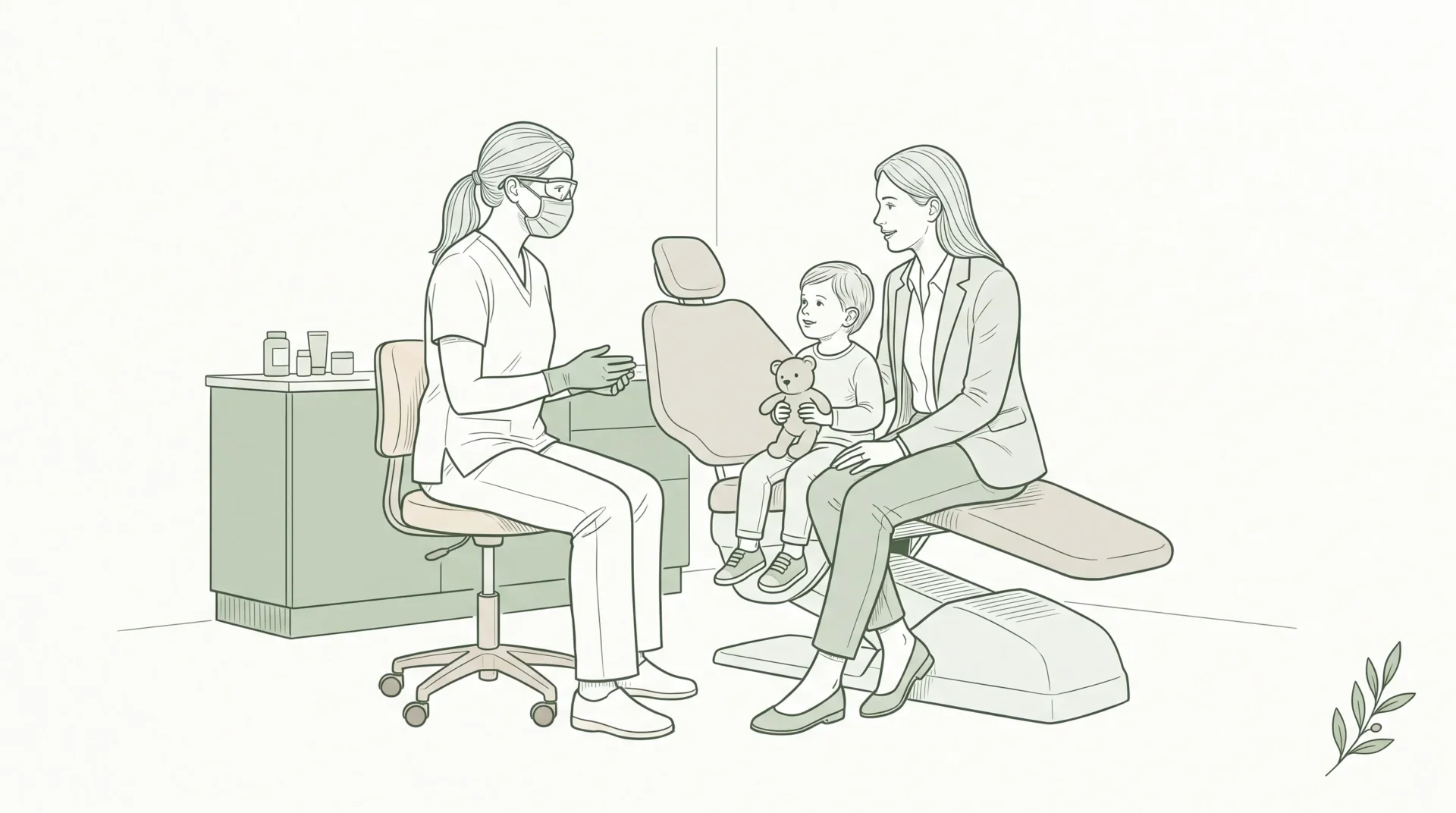
A first appointment at a family dental center may focus on meeting the team, discussing concerns and finding out which parts of an examination your child can manage. Ask beforehand whether a familiarisation visit is available, what it includes and whether there is a fee.
Depending on your child’s needs, the dentist might begin with a conversation while they remain upright, show a dental mirror or explain a proposed step before approaching their mouth. These are options to discuss, not a fixed sequence that every child must complete.
Some children prefer detailed preparation. Others find repeated discussion increases worry. Use your knowledge of your child when deciding how much information to share beforehand. Any photographs or picture schedules should reflect the actual practice and planned visit where possible.
An examination, cleaning or X-rays should only be proposed when clinically appropriate. They may not all be achievable at the first appointment. If an assessment is incomplete, ask what remains unknown and how that affects the next steps.
For background on routine checks and prevention, our article on how family dental visits support children’s oral health explains their broader purpose.
Know when another care setting may be appropriate
A family practice may be suitable for some children with sensory needs. Others may need a paediatric dentist, a registered specialist in children’s dental care, or a service with additional facilities. Referral is not a failure by your child or family. It can be a way to match care to their needs.
Ask how the dentist would approach treatment that your child cannot currently tolerate. Depending on the dental problem, options might include further preparation, a modified treatment plan or referral for assessment of additional support.
Sedation or general anaesthesia may be considered in selected circumstances. These involve separate assessment, risks, costs and recovery requirements. They are not automatically needed because a child has sensory differences, and they do not replace discussion about communication and comfort.
If your child has tooth pain, swelling or a broken tooth, tell the practice when booking rather than waiting for a familiarisation visit. Facial swelling with difficulty breathing or swallowing needs emergency medical attention. Call 000 for breathing difficulty. Healthdirect’s advice on toothache and swelling explains when urgent care is needed.
Clarify costs and the follow-up plan
Ask the family dental center for an estimate of the proposed first appointment and an explanation of any separate fees for familiarisation or longer visits. If the examination cannot be completed, clarify what the appointment fee covers and how further visits would be planned.
Some children may be eligible for the Australian Government’s Child Dental Benefits Schedule, which helps cover selected dental services. Check current eligibility, remaining benefits and whether the proposed service is covered. Eligibility does not mean every appointment will be bulk billed or that every treatment is included.
Before leaving, ask for a clear next step: what was assessed, whether anything needs attention and what preparation may help next time. Record useful details, such as a tolerated flavour or preferred chair position, while they are fresh.
Frequently asked questions
Does my child need a diagnosis before I ask for adjustments? No. Describe the sensations, situations and communication needs that affect your child. The dental team can discuss possible adjustments without you having to establish a diagnosis first.
Can any family dental center treat a child with sensory needs? Capability varies with the team’s experience, available facilities and the care required. Ask about your child’s particular needs rather than assuming a general statement about children’s dentistry covers every situation.
Can I stay with my child during the appointment? Ask before booking. A parent or support person’s presence may be helpful, but arrangements depend on the procedure, available space and safety requirements. Discuss how you can support communication without overwhelming your child with several people speaking at once.
What if my child cannot open their mouth for an examination? Let the dentist know and discuss what assessment, if any, is manageable. An incomplete examination limits what the dentist can determine. The next step should reflect symptoms, clinical concerns and your child’s needs, rather than simply repeating an approach that caused distress.
Discuss your child’s needs before booking
All About Smiles offers children’s dentistry, and the team sees patients at both the Ettalong and Kincumber locations. You can contact All About Smiles about an appointment and describe your child’s sensory and communication needs beforehand. Ask which adjustments can be offered and whether an initial visit or referral may be appropriate for their circumstances.
Disclaimer
The information provided on this website is for general informational and educational purposes only. It is not intended to replace professional dental advice, diagnosis or treatment. Dental needs and treatment outcomes vary between individuals. Always seek advice from a qualified dental practitioner regarding your specific circumstances before making decisions about your oral health or treatment. A consultation and clinical assessment are required to determine which treatment options may be suitable for you. All dental procedures carry potential risks and benefits, which will be discussed with you before treatment.