
When Specialist Dental Care May Be Part of Your Treatment Plan
28 September 2026
Most dental treatment can be planned and provided by a general dentist, but there are times when specialist dental care may be included as part of a broader treatment plan. This does not mean something has gone wrong. It usually means your dentist believes a more focused opinion, procedure or diagnosis may be useful for your individual situation.
At All About Smiles, treatment planning starts with understanding your oral health, symptoms, goals, medical history and any concerns you have about treatment. If a referral is worth considering, your dentist can explain why, what information will be shared and how that care may fit with your ongoing appointments at the Ettalong or Kincumber location.
What specialist dental care means in dentistry
In Australia, a dental specialist is a dentist who has completed additional recognised training and holds specialist registration in a specific area of dentistry. The Dental Board of Australia explains specialist registration and the areas of practice that are recognised.
General dentists manage a wide range of everyday oral health needs, including check-ups, fillings, cleans, crowns, root canal therapy, children’s dentistry, cosmetic treatment discussions and urgent dental concerns. For many patients, this is enough. In other cases, specialist dental care can support diagnosis or treatment when a concern is more complex, uncommon or closely linked with another health factor.
Why your dentist might recommend specialist dental care
A referral is usually about making the treatment plan more appropriate, not about making it more complicated than necessary. Your dentist may recommend a specialist opinion when the diagnosis is unclear, the anatomy of a tooth or jaw is complex, treatment carries additional risks or several options need to be compared carefully.
This may also happen when your medical history, medications or previous dental treatment need extra consideration. For example, some patients have gum disease, missing teeth, bite concerns, dental anxiety, a history of facial trauma or health conditions that may affect healing. A more focused assessment can help clarify what is suitable and what limitations should be discussed before treatment begins.
A referral can also be used for planning rather than active treatment. Sometimes the specialist provides advice and your general dentist continues the care. In other situations, the specialist performs a specific part of the treatment, then your dentist continues maintenance, reviews and related dental care.
Common situations where a referral may be discussed
Specialist dental input may be considered across different areas of dentistry. The exact recommendation depends on your examination, X-rays or scans, symptoms, oral health and personal circumstances.
Complex tooth pain or root canal concerns
A general dentist can assess toothache, cracked teeth, deep decay and infected teeth. In some cases, root canal therapy may be suitable. If the tooth has unusual root anatomy, a previous root canal has not settled, the diagnosis is difficult or the tooth has a complex fracture, an endodontist may be considered. An endodontist is a dental specialist focused on the tooth pulp, root canals and conditions affecting the inside of teeth.
Gum disease, bone levels and implant planning
Gum health affects the long-term support around teeth. If gum disease is advanced, does not respond as expected or is linked with other treatment planning needs, a periodontist may be involved. Periodontists focus on the gums, bone and supporting tissues around teeth.
Where dental implants are being considered, the planning may involve assessing bone volume, gum health, bite forces, medical history and the condition of neighbouring teeth. Depending on the case, this may involve input from a periodontist, oral surgeon, prosthodontist or another appropriately registered practitioner.
Orthodontic and bite concerns
Orthodontic treatment can be used to assess and manage the position of teeth and jaws. Some cases are straightforward, while others involve growth concerns, significant crowding, missing teeth, impacted teeth or complex bite patterns. An orthodontist may be recommended when tooth movement needs a more specialised assessment.
Before orthodontic care is considered, your general dentist will usually assess decay risk, gum health, existing fillings or crowns and oral hygiene. This is why general dentistry and orthodontics often work together during planning and maintenance.
Oral lesions, jaw symptoms or medical complexity
Changes in the mouth, tongue, lips or jaw sometimes need careful assessment. A dentist may monitor a minor concern, take images, provide initial care or refer for specialist assessment if something is persistent, unusual or difficult to diagnose.
This may include non-healing ulcers, persistent lumps, jaw joint concerns, facial pain, suspected oral medicine conditions or complex surgical questions. Referral does not mean a serious condition has been diagnosed. It means more information may be needed before the next step is decided.
What happens before a referral is made
Before recommending specialist dental care, your dentist will usually gather enough information to understand the likely issue and whether referral is appropriate. This may include a conversation about your symptoms, a clinical examination, X-rays, photographs, bite assessment, gum measurements or a review of your medical history.
The table below shows how a referral may fit into a treatment planning process.
| Stage | What may happen | Why it matters |
|---|---|---|
| Initial assessment | Your dentist asks about symptoms, concerns, medical history and previous treatment | Helps identify whether the issue can be managed in general dental care or needs further input |
| Clinical examination | Teeth, gums, bite, soft tissues and existing dental work are assessed | Provides a clearer picture of oral health before planning treatment |
| Diagnostic records | X-rays, photographs or scans may be discussed if clinically appropriate | Supports diagnosis and helps explain treatment options |
| Treatment discussion | Your dentist explains possible options, limitations, risks and next steps | Gives you time to ask questions before agreeing to a plan |
| Referral, if needed | Relevant information may be sent to a registered dental specialist | Helps the specialist understand the reason for referral and your dental history |
Routine dental care is often the starting point because it helps identify concerns early and keeps treatment planning grounded in your overall oral health. If you want to understand what general care commonly includes, All About Smiles has a patient guide to general dental services for everyday oral health.
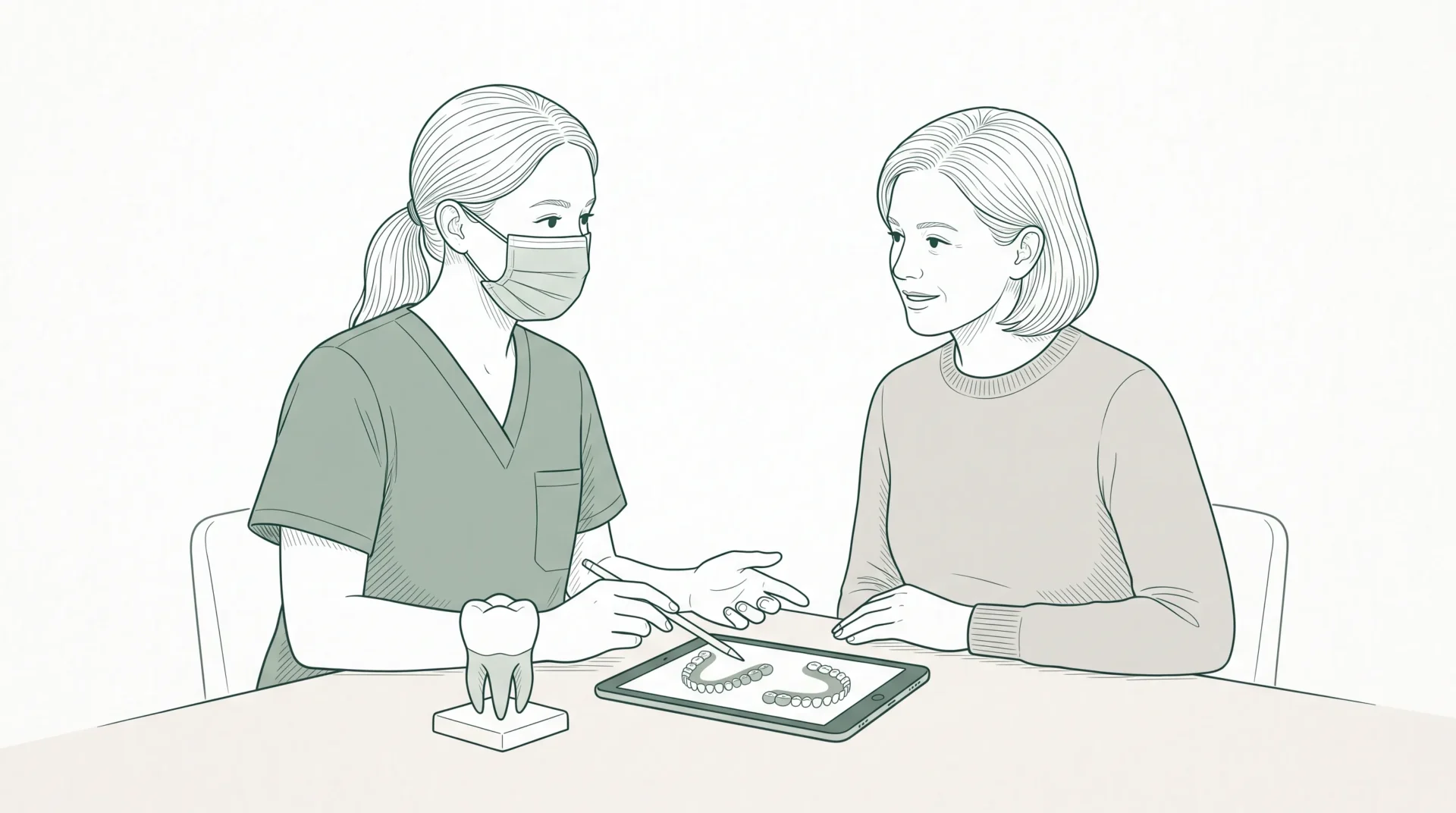
How your general dentist and a dental specialist may work together
When specialist dental care is involved, your general dentist often remains part of the overall plan. The referral may ask for an opinion, a diagnosis, a particular procedure or help with sequencing several treatments.
For example, a specialist may assess whether a tooth is likely to respond well to further root canal treatment. They may provide a report, discuss treatment options with you or carry out a specific procedure. Your general dentist may then continue with a crown, filling, preventive care, gum maintenance or review appointments, depending on what is needed.
This shared approach can be useful when several parts of dentistry overlap. A patient considering cosmetic treatment may first need gum health assessed. A patient thinking about implants may need a review of bite forces and remaining teeth. A patient with tooth movement planned may need existing restorations checked before orthodontic treatment begins.
Good communication matters. You can ask who is responsible for each part of the plan, what records will be shared, what the expected sequence is and whether there are alternative options.
Questions to ask if specialist dental care is recommended
If specialist dental care becomes part of the conversation, it is reasonable to take time to understand the recommendation. You do not need to make every decision during the first appointment unless there is a genuine urgent concern.
Helpful questions include:
- Why is a referral being recommended in my case?
- What type of dental specialist may be involved?
- Is the referral for an opinion, treatment or both?
- What are the possible benefits, risks and limitations?
- Are there alternatives, including no treatment or monitoring?
- What information will be sent with the referral?
- How will my general dentist and the specialist communicate?
- What costs should I ask about before proceeding?
Clear questions can help you feel more informed, especially when several treatment options are possible. It can also be helpful to bring a list of medications, previous dental records if you have them and any private health insurance details you want to check.
Cost, timing and treatment limitations
The cost of dental treatment can vary for many reasons, including the type of procedure, complexity, diagnostic records, materials, number of appointments and whether outside specialist care is involved. A specialist practice may have its own consultation fees, treatment fees and payment arrangements.
Before deciding, ask for a written estimate where possible and check what is included. If you have private health insurance, your fund can explain whether any benefits apply to your policy. All About Smiles also offers flexible payment options that can be discussed before treatment proceeds.
It is also worth understanding that all dental procedures carry possible risks and benefits. Treatment outcomes, healing times and experiences vary between patients. A clinical assessment is needed before a dentist can recommend whether a treatment is suitable for you.
For a broader explanation of why fees can differ between patients and procedures, you may find this guide to what affects the price of dental treatment useful.
When to seek urgent dental advice instead of waiting
Sometimes a dental issue needs prompt assessment before any longer-term plan is considered. Seek urgent dental advice if you have severe or worsening toothache, facial swelling, swelling inside the mouth, dental trauma, a broken tooth with pain, uncontrolled bleeding or signs of infection.
If you have difficulty breathing or swallowing, significant facial swelling, fever with worsening symptoms or trauma involving the head or face, seek emergency medical care or call 000.
An urgent appointment may focus first on comfort, infection control, stabilising a tooth or assessing the cause of symptoms. Specialist dental involvement, if needed, may be discussed after the immediate concern has been assessed. All About Smiles has a practical guide on what to do when you need urgent dental care if you are unsure how to respond to a dental emergency.
Frequently Asked Questions
Does needing a dental specialist mean my dentist cannot treat me? Not necessarily. A referral may be recommended because a focused opinion or procedure could support the treatment plan. Your general dentist may still manage other parts of your care.
Is specialist dental care always required for implants, root canals or orthodontics? No. Many treatments can be assessed and managed by a general dentist, depending on the case. A referral may be considered when the situation is complex, higher risk or outside the scope of routine care.
Can I choose whether to see a dental specialist? In most non-urgent situations, you can ask questions, consider alternatives and decide whether to proceed with a referral. Your dentist can explain the possible risks of delaying or declining a recommended referral.
Will I return to my general dentist after seeing a specialist? Often, yes. Many referrals involve one part of a broader plan. Your general dentist may continue preventive care, restorations, reviews or maintenance after the specialist has provided advice or treatment.
What should I bring to a specialist appointment? Bring your referral information, medication list, medical history details, relevant dental records if supplied and any questions you want answered. If you have private health insurance, bring those details too.
Discussing your treatment plan with All About Smiles
If specialist dental care has been mentioned, or you are unsure whether a dental concern needs further assessment, a consultation can help clarify your options. The team at All About Smiles sees patients at both the Ettalong and Kincumber locations on the Central Coast.
Your dentist can assess your oral health, discuss possible next steps and explain whether a referral may be appropriate for your circumstances. To arrange a time, you can visit All About Smiles and book an appointment online.
Disclaimer
The information provided on this website is for general informational and educational purposes only. It is not intended to replace professional dental advice, diagnosis or treatment. Dental needs and treatment outcomes vary between individuals. Always seek advice from a qualified dental practitioner regarding your specific circumstances before making decisions about your oral health or treatment. A consultation and clinical assessment are required to determine which treatment options may be suitable for you. All dental procedures carry potential risks and benefits, which will be discussed with you before treatment.