
Caring for Smiles During Pregnancy and Oral Health
28 September 2026
Pregnancy can affect your mouth earlier than many people expect. Caring for smiles during this time means keeping your teeth and gums as comfortable and healthy as possible while your body, eating patterns and daily routine are changing.
For most people, pregnancy does not mean avoiding the dentist. It usually means telling your dental team you are pregnant, keeping up with preventive care and seeking advice if you notice bleeding gums, toothache, swelling, reflux-related sensitivity or other changes. This article offers general information only and does not replace personalised advice from your dentist, midwife, GP or obstetric team.
Why caring for smiles matters during pregnancy
Pregnancy hormones can change how gum tissue responds to plaque, which is the sticky film of bacteria that builds up on teeth. This does not mean your teeth or gums will automatically become unhealthy, but it can make existing plaque irritation more noticeable.
You may find your gums bleed more easily when brushing or flossing. Some people notice redness, swelling or tenderness, even when their brushing routine has not changed much. The Australian Dental Association’s Teeth.org.au pregnancy guidance explains common oral health changes during pregnancy and why regular dental care remains important.
Pregnancy can also affect oral health indirectly. Nausea, vomiting, reflux, fatigue and food cravings can all change how often teeth are exposed to acid or sugar. In practical terms, caring for smiles during pregnancy is less about doing anything complicated and more about adjusting your routine so it still works on difficult days.
Common oral health changes during pregnancy
Every pregnancy is different. Some people notice very little change in their mouth, while others find their gums, enamel or brushing routine are affected for several months.
The table below outlines common changes and sensible ways to respond. It is not a diagnosis, so it is worth discussing persistent symptoms with a dentist.
| Pregnancy-related change | What you may notice | What may help |
|---|---|---|
| Gums reacting more strongly to plaque | Bleeding, tenderness, redness or swelling | Keep brushing gently, clean between teeth and arrange a dental check-up if symptoms persist |
| Morning sickness or reflux | Acid taste, sensitivity or enamel wear risk | Rinse with water after vomiting and wait about 30 minutes before brushing |
| More frequent snacking | Increased exposure to sugars and acids | Choose tooth-friendly snacks where possible and drink plain water often |
| Dry mouth | Sticky feeling, bad breath or discomfort | Sip water regularly and ask your dentist if symptoms are ongoing |
| Strong gag reflex or fatigue | Brushing feels harder than usual | Try a smaller toothbrush head, brush at a different time of day or use short brushing sessions |
When symptoms change, caring for smiles may mean adapting rather than giving up on your usual habits. If flossing makes your gums bleed, for example, stopping completely may allow more plaque to remain. A dentist can show you a gentler technique or suggest another way to clean between teeth.
Dental appointments during pregnancy: what to expect
A routine dental visit during pregnancy may include a discussion about your symptoms, a check of your teeth and gums, advice about home care and professional cleaning if clinically appropriate. The dentist may also ask about your stage of pregnancy, relevant medical history, medications, nausea, reflux and any pregnancy complications.
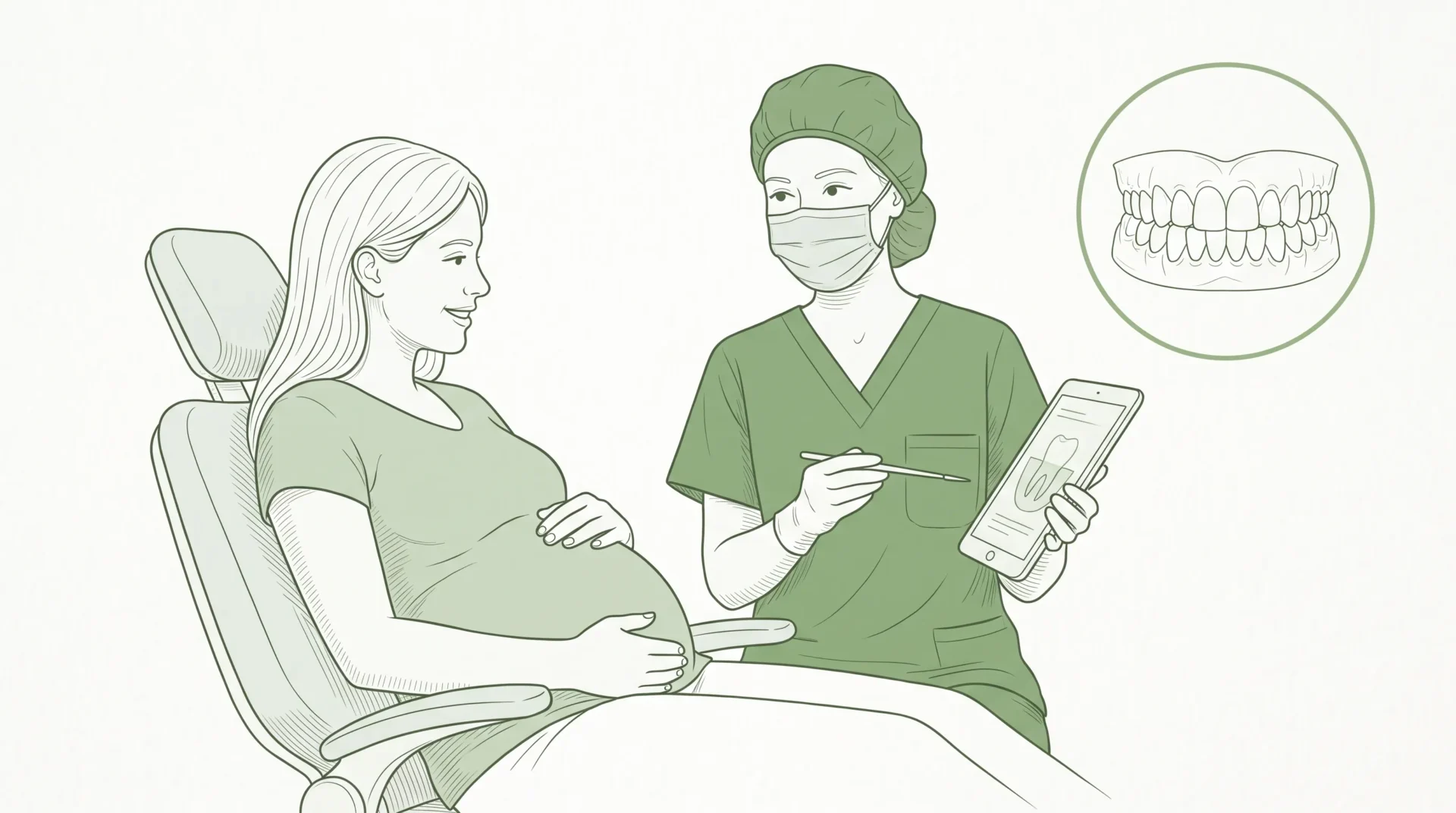
At an appointment, caring for smiles starts with context. Let the dental team know you are pregnant, even if you are only in the early weeks. This helps them consider appointment timing, comfort, medication choices and whether any non-urgent care may be better planned for later.
Dental X-rays are not taken routinely without a clinical reason. If imaging is needed for a dental problem, your dentist can explain why it is being considered, what precautions are used and whether delaying it is reasonable in your circumstances.
If you have toothache, swelling, a broken tooth or signs of infection, it is sensible to seek dental advice rather than waiting until after birth. Untreated dental problems can become more difficult to manage, and your dentist can discuss options that may be appropriate during pregnancy.
Caring for smiles at home when nausea, cravings or fatigue get in the way
A good pregnancy oral health routine should be realistic. Some days, nausea or tiredness can make a full routine feel difficult. Rather than aiming for a rigid plan, focus on the habits that give the most benefit and adjust them to suit how you are feeling.
Useful home care habits include:
- Brush twice a day with fluoride toothpaste and a soft-bristled toothbrush.
- Clean between teeth once a day if you can, using floss or interdental brushes that feel manageable.
- After vomiting, rinse with water and avoid brushing straight away, as the enamel may be temporarily softened by acid.
- Drink plain water often, especially after snacks, acidic drinks or reflux episodes.
- If brushing triggers gagging, try a smaller brush head or brush at a time of day when nausea is usually milder.
- If cravings lead to frequent sweet snacks or drinks, try having them with meals rather than sipping or grazing over long periods.
For a broader guide to brushing, cleaning between teeth and tooth-friendly daily choices, All About Smiles has shared practical advice on everyday dental habits.
A flexible approach to caring for smiles can make the routine feel more achievable. If you miss part of your routine one day, restart when you can rather than feeling you have failed. Consistency over time matters more than a single difficult morning.
Looking after gums without feeling alarmed
Bleeding gums can be unsettling, especially if it begins during pregnancy. In many cases, bleeding is linked to gum inflammation rather than brushing too hard, although technique can play a role. The aim is to remove plaque gently and consistently without scrubbing.
Caring for smiles during pregnancy also means noticing when gum symptoms are not settling. Speak with a dentist if you have bleeding that continues for more than a couple of weeks, gum swelling, gum recession, pus, a bad taste, loose teeth or pain when chewing.
Professional advice is also worthwhile if you have a history of gum disease, diabetes, smoking or other health factors that may affect your gums. Your dentist can assess your situation and explain whether monitoring, cleaning or further treatment may be appropriate.
For general information about gum care, you may find this All About Smiles article on healthy gum advice useful.
What about whitening, cosmetic treatment and elective dental work?
Pregnancy is often a time to prioritise comfort, prevention and necessary dental care. Elective cosmetic treatments, such as whitening, are commonly postponed until after pregnancy, particularly where there is no urgent dental need. This is not because every cosmetic procedure is automatically unsafe, but because timing, evidence, comfort and individual circumstances need to be considered carefully.
If you are already in the middle of orthodontic treatment, restorative treatment or another dental plan, tell your dentist or treating clinician that you are pregnant. They can advise whether your care should continue as planned, be adjusted or be delayed.
All dental procedures carry potential risks and benefits. Treatment suitability depends on your oral health, medical history, anatomy, pregnancy stage, symptoms and goals. A clinical assessment is needed before any treatment can be recommended.
Planning oral health care after your baby arrives
After birth, dental care can easily slip down the list. Feeding schedules, disrupted sleep and new routines can make appointments and home care harder to organise. If you have had gum inflammation, reflux-related sensitivity or unfinished dental treatment during pregnancy, it may be useful to plan a review when it feels manageable.
Caring for smiles at this stage can also include thinking ahead about your child’s oral health. Babies do not need complicated dental routines, but early habits around feeding, cleaning gums and introducing toothbrushing can support oral health as they grow.
All About Smiles has a separate guide with family dental care tips for every stage of life, including pregnancy, babies, children and adults.
When to seek dental advice sooner
Some symptoms should not be ignored during pregnancy. Contact a dentist promptly if you have facial swelling, a toothache that does not settle, a broken tooth with pain, pus, fever, difficulty opening your mouth, trauma to the teeth or gums, or bleeding that is heavy or unexplained.
These symptoms do not always mean something serious is happening, but they do need proper assessment. If you are unsure whether a dental concern can wait, it is reasonable to call a dental practice, GP or relevant health service for guidance.
For non-urgent concerns, a dental check-up can help you understand what is happening and what options may be available. The goal is to support informed decisions, not to encourage treatment you do not need.
Frequently asked questions
Is it safe to visit the dentist while pregnant? Routine dental care is commonly provided during pregnancy, but you should always tell your dentist that you are pregnant. Your dentist can consider your stage of pregnancy, medical history and symptoms before recommending care.
Can pregnancy weaken my teeth? Pregnancy does not automatically weaken teeth or remove calcium from them. However, vomiting, reflux, frequent snacking, dry mouth and changes in routine can increase the risk of enamel wear or decay for some people.
What should I do after vomiting during pregnancy? Rinse your mouth with water and avoid brushing straight away. Waiting about 30 minutes before brushing helps reduce the chance of brushing acid-softened enamel. If vomiting or reflux is frequent, ask your dentist for tailored advice.
Should I delay cosmetic dental treatment during pregnancy? Many elective cosmetic treatments can be postponed until after pregnancy, depending on the treatment and your circumstances. Your dentist can discuss timing, risks, benefits and alternatives before you decide.
What does caring for smiles during pregnancy mean in practice? It means keeping a steady home care routine, adapting when nausea or fatigue gets in the way, watching for gum or tooth changes and speaking with a dentist when symptoms persist or concern you.
Talk with a dentist about pregnancy and oral health
If you are pregnant or planning a pregnancy and have questions about your teeth or gums, you can book an appointment with All About Smiles at either the Ettalong or Kincumber location.
The team can assess your oral health, explain what they find and discuss care options that may be suitable for your circumstances. Caring for smiles during pregnancy is personal, so advice is most useful when it is based on your mouth, your health and your stage of pregnancy.
Disclaimer
The information provided on this website is for general informational and educational purposes only. It is not intended to replace professional dental advice, diagnosis or treatment. Dental needs and treatment outcomes vary between individuals. Always seek advice from a qualified dental practitioner regarding your specific circumstances before making decisions about your oral health or treatment. A consultation and clinical assessment are required to determine which treatment options may be suitable for you. All dental procedures carry potential risks and benefits, which will be discussed with you before treatment.