
What Does an Aesthetic Dentist Do for Your Smile?
12 August 2026
A beautiful smile is not only about bright, straight teeth. It is also about comfort, proportion, healthy gums, a stable bite and results that still feel like you. That is where an aesthetic dentist can help.
An aesthetic dentist looks at the appearance of your smile through a clinical lens. Rather than focusing on one tooth in isolation, they consider how your teeth, gums, lips, face shape and bite work together. The goal is to improve the look of your smile while protecting, and often improving, your oral health.
For people in Ettalong, Kincumber and across the NSW Central Coast, aesthetic dentistry can be helpful if you feel self-conscious about stained, chipped, uneven, worn, crowded or missing teeth. It can also be useful if old dental work no longer blends naturally with your smile.
What is an aesthetic dentist?
An aesthetic dentist is a dentist with a strong focus on the appearance, balance and harmony of the smile. The term is closely related to cosmetic dentistry, but good aesthetic dentistry goes further than simply changing how teeth look. It also considers function, long-term tooth health and how treatment will age over time.
In Australia, “aesthetic dentist” is generally a descriptive term rather than a separate registered dental specialty. The Dental Board of Australia explains specialist registration categories, so it is helpful to understand that aesthetic dentistry usually refers to an area of interest and experience, not a protected specialist title.
That does not make the role any less valuable. It simply means patients should look for a dentist who communicates clearly, examines the whole mouth, explains risks and alternatives, and recommends treatment that is appropriate for their oral health.
What does an aesthetic dentist look at before recommending treatment?
Aesthetic dentistry starts with diagnosis. Before discussing veneers, whitening, crowns or orthodontics, a dentist needs to understand what is happening underneath the surface.
They may assess tooth colour, tooth shape, gum position, crowding, spacing, enamel wear, chips, cracks, previous fillings, jaw movement and the way your upper and lower teeth meet. They will also consider your goals. Some people want a subtle refresh, while others are looking for a more noticeable smile makeover.
A health-first approach matters because cosmetic changes placed over unresolved issues can lead to disappointment. For example, whitening may not give an even result if there are old fillings on front teeth. Veneers may not last well if tooth grinding is not managed. Straightening teeth may be more successful when gums are healthy first.
| What the dentist assesses | Why it matters for your smile |
|---|---|
| Gum health | Inflamed or receding gums can affect appearance, comfort and treatment stability |
| Tooth enamel | Erosion, wear or cracks may influence whether bonding, veneers or crowns are suitable |
| Bite and jaw function | Grinding, clenching or an uneven bite can damage cosmetic dental work |
| Tooth colour and shade | Natural-looking results depend on shade matching and realistic expectations |
| Tooth position | Crowding, gaps or rotations may be better treated with orthodontics before cosmetic work |
| Existing dental work | Old fillings, crowns or restorations may need updating to blend with a new smile |
Common ways an aesthetic dentist can improve your smile
The right treatment depends on your teeth, your budget, your timeline and how much change you want. In many cases, the best result comes from combining small, carefully planned improvements rather than choosing the most dramatic option first.
Professional teeth whitening
Whitening is often used when teeth are healthy but have become darker due to ageing, food and drink stains, smoking history or natural shade changes. It can brighten a smile without altering tooth shape.
However, whitening does not change the colour of crowns, veneers or tooth-coloured fillings. An aesthetic dentist can explain whether whitening should happen before replacing visible restorations, so the final colour match looks more consistent.
Composite bonding
Composite bonding uses tooth-coloured resin to repair small chips, close minor gaps or refine uneven edges. It is usually more conservative than porcelain veneers because it often requires little or no removal of natural tooth structure.
Bonding can be a good option for subtle improvements, but it may stain or wear over time. A dentist will explain maintenance, polishing and whether your bite makes bonding more or less suitable.
Porcelain veneers
Veneers are thin porcelain coverings placed over the front surface of teeth. They can improve colour, shape, size and symmetry, especially for front teeth that are chipped, worn, uneven or resistant to whitening.
An aesthetic dentist should plan veneers carefully. This includes checking the bite, discussing how many teeth are involved, choosing a natural shade and explaining that veneers usually require some permanent alteration to the tooth surface. The most successful veneer results are not necessarily the whitest. They are the ones that suit the person’s face and look believable in everyday light.
Dental crowns
A crown covers and protects a tooth that has lost significant structure due to cracks, decay, large fillings or previous root canal treatment. In aesthetic dentistry, crowns can also improve the appearance of damaged or heavily restored teeth.
The key difference is that crowns are not just cosmetic. They are often chosen because the tooth needs strength and protection. If your concern is a cracked, weakened or heavily filled tooth, a dental crown may be recommended for strength as well as appearance.
Orthodontics and clear aligner treatment
Sometimes the most natural-looking aesthetic improvement comes from moving teeth rather than covering them. Orthodontic treatment can help with crowding, gaps, rotations and bite issues.
Straightening teeth can also make oral hygiene easier, which supports gum health and long-term smile stability. In some smile plans, orthodontics is completed before whitening, bonding or veneers so less tooth structure needs to be altered.
Dental implants for missing teeth
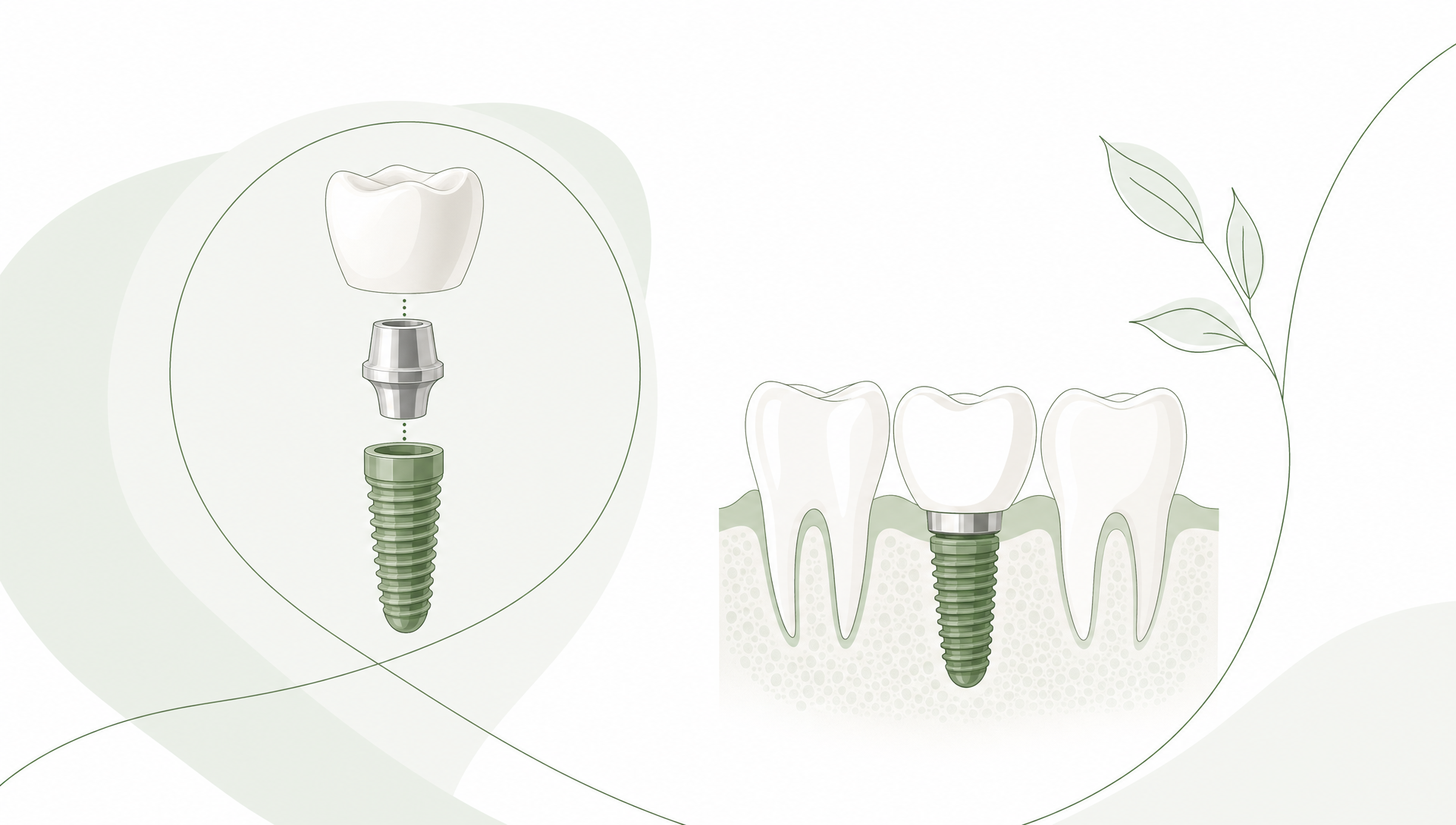
A missing tooth can affect more than appearance. It can change chewing comfort, allow neighbouring teeth to shift and alter the balance of a smile. Dental implants are one option for replacing missing teeth, depending on bone support, gum health, medical history and individual suitability.
An aesthetic dentist will consider how the replacement tooth emerges from the gum, how it matches neighbouring teeth and how it functions when you bite. For front teeth, this planning is especially important because small differences in gum shape or tooth colour can be noticeable.
Smile design: making changes that still look natural
Aesthetic dentistry is not about giving every patient the same smile. A well-designed smile should suit your facial features, lip movement, age, personality and preferences.
A dentist may look at tooth proportions, the curve of the smile line, the amount of tooth visible when you speak, and whether the edges of the teeth follow the lower lip. They may also consider whether the gum line is even and whether the midline of the teeth suits the face.
Natural aesthetics often come from small details. Teeth are not usually one flat colour. They have translucency, texture and subtle differences from tooth to tooth. A smile that is too uniform can look artificial, while a smile with balanced imperfections can look fresh and believable.
This is why communication is so important. Bring photos of smiles you like, but also be open to professional advice about what will suit your teeth and face. A good aesthetic dentist will help translate your preferences into a result that is realistic, healthy and maintainable.
Why oral health comes before cosmetic dentistry
Healthy gums and teeth are the foundation of every aesthetic result. If gums bleed easily, teeth are loose, decay is active or enamel is weakening, cosmetic treatment may need to wait until those issues are addressed.
Gum health is especially important because the gums frame the teeth. Swollen or inflamed gums can make teeth look shorter, uneven or less clean, even when the teeth themselves are healthy. If you are trying to improve your smile, it is worth understanding the basics of keeping your gums healthy before starting cosmetic treatment.
Tooth surface damage also matters. Acid wear can make teeth look thinner, shorter or more yellow as enamel is lost. If erosion is ongoing, cosmetic work may be at greater risk. Patients who notice sensitivity, cupping on biting surfaces or translucent edges may benefit from learning more about what tooth erosion is and how it affects teeth.
This health-first approach does not make treatment less aesthetic. It makes it more predictable. When the mouth is stable, results are more likely to look good, feel comfortable and last.
What happens at an aesthetic dental consultation?
An aesthetic consultation is a chance to understand your options, not a commitment to treatment. The dentist will usually ask what you like and dislike about your smile, how long the concern has been present and whether you have symptoms such as sensitivity, pain, bleeding gums, headaches or jaw tension.
They may examine your teeth and gums, check your bite and take dental images or X-rays if clinically needed. They may also discuss previous dental work and lifestyle factors such as coffee, tea, smoking, sports, grinding or reflux, because these can affect treatment planning and maintenance.
The treatment discussion should cover benefits, limitations, timeframes, costs and alternatives. For example, a chipped front tooth may be improved with bonding, a veneer or a crown depending on the amount of damage. Crowded teeth may be treated with orthodontics, restorative dentistry or a combination. There is rarely only one pathway, and each option has trade-offs.
A good plan should answer three questions: what is needed for health, what is desired for appearance and what is realistic for your circumstances.
How long do aesthetic dental results last?
Longevity depends on the treatment, your oral hygiene, your bite, your diet and whether you grind or clench. Whitening may need periodic top-ups. Composite bonding may need polishing, repair or replacement over time. Veneers and crowns can last for many years, but they still require care and regular dental reviews.
The Australian Dental Association’s oral health information highlights the importance of prevention and daily care, which remains true after cosmetic treatment. Brushing, cleaning between teeth, regular dental visits and managing risk factors are all part of protecting your investment.
If you clench or grind, your dentist may recommend a night guard to reduce the risk of chips, cracks or excessive wear. If you play contact sport, a custom mouthguard may be important. If you frequently consume acidic drinks, managing acid exposure can help protect both natural teeth and dental restorations.
How to choose the right aesthetic dentist
Choosing an aesthetic dentist is a personal decision. You want someone who listens, but also someone who is prepared to tell you when a treatment is not the healthiest option.
Look for clear explanations, a thorough examination and a balanced discussion of pros and cons. Be cautious if treatment is presented as one-size-fits-all or if the focus is only on appearance without checking gum health, tooth structure and bite.
Helpful questions to ask include:
- What are all my suitable options, including the most conservative ones?
- What needs to be treated before cosmetic work can begin?
- How long is this result expected to last, and what maintenance will it need?
- What are the risks if I grind, clench or have acid wear?
- Will the treatment change my natural teeth permanently?
- What happens if I chip, stain or damage the restoration later?
For Central Coast patients, convenience also matters. Having access to general dentistry, cosmetic dentistry and advanced treatments in one local practice can make planning easier, especially when a smile improvement involves more than one stage.
Frequently Asked Questions
Is an aesthetic dentist the same as a cosmetic dentist? The terms are often used in similar ways. “Cosmetic dentist” usually focuses on improving appearance, while “aesthetic dentist” often implies a broader focus on natural-looking smile design, facial harmony, function and oral health. In Australia, neither term is a separate registered specialty.
Can an aesthetic dentist fix chipped teeth? Yes, depending on the size and cause of the chip. Small chips may be repaired with composite bonding, while larger fractures may need a veneer or crown. The dentist will also check why the chip happened, such as grinding, bite pressure or weakened enamel.
Are veneers always the best option for a better smile? Not always. Veneers can be excellent for the right case, but whitening, bonding, orthodontics, gum care or replacing old restorations may be more suitable. A conservative plan often gives the best long-term result.
Will aesthetic dental treatment hurt? Many aesthetic treatments are comfortable, and local anaesthetic can be used when needed. Some treatments may cause temporary sensitivity, especially whitening or work involving enamel preparation. Your dentist should explain what to expect before treatment begins.
How do I keep my new smile looking good? Maintain daily brushing, clean between your teeth, attend regular dental reviews and follow any advice about night guards, mouthguards or diet. Avoid using teeth as tools, and seek advice early if you notice chips, looseness, sensitivity or gum changes.
Ready to talk about your smile?
If you are wondering what an aesthetic dentist could do for your smile, the best first step is a personalised assessment. Your ideal plan may be simple, or it may involve staged care that combines health, function and appearance.
All About Smiles provides general, cosmetic and advanced dental care from local clinics in Ettalong and Kincumber, with online booking and flexible payment options available. If you are ready to explore natural-looking ways to improve your smile, you can book an appointment with All About Smiles and discuss the options that suit your teeth, goals and lifestyle.
Disclaimer
The information provided on this website is for general informational and educational purposes only. It is not intended to replace professional dental advice, diagnosis or treatment. Dental needs and treatment outcomes vary between individuals. Always seek advice from a qualified dental practitioner regarding your specific circumstances before making decisions about your oral health or treatment. A consultation and clinical assessment are required to determine which treatment options may be suitable for you. All dental procedures carry potential risks and benefits, which will be discussed with you before treatment.