
Healthy Smiles Start With These Everyday Dental Habits
11 August 2026
A healthy smile is not built in one dental appointment. It is shaped by the small things you do every day, often in less than five minutes at a time. Brushing well, cleaning between your teeth, choosing tooth-friendly drinks, and booking regular check-ups all work together to protect your teeth and gums for the long term.
The good news is that everyday dental habits do not need to be complicated. Whether you are caring for your own teeth, helping children build confidence with brushing, or trying to prevent future dental problems, a consistent routine can make a noticeable difference.
Why everyday habits matter for healthy smiles
Your mouth is home to bacteria that naturally form a sticky layer called plaque. When plaque is not removed thoroughly, it can contribute to tooth decay, gum inflammation, bad breath, and tartar build-up. Over time, small issues can become more uncomfortable, more complex, and more costly to treat.
Preventive dental care is about staying ahead of those problems. Daily habits reduce plaque, protect enamel, support healthy gums, and help you notice changes early. The Australian Dental Association’s patient education site also highlights the importance of brushing, flossing, limiting sugar, and visiting the dentist regularly as foundations of good oral health.
Think of your dental routine like fitness for your mouth. One workout will not change everything, but the right routine, repeated consistently, can strengthen your long-term oral health.
Brush twice a day, but focus on technique
Most people know they should brush morning and night, but technique matters just as much as frequency. A rushed scrub can miss the gumline, the back teeth, and the inner surfaces where plaque often lingers.
Use a soft-bristled toothbrush and fluoride toothpaste. Hold the brush at a slight angle toward the gumline and use gentle, circular motions rather than hard back-and-forth scrubbing. Brushing too aggressively can irritate gums and contribute to enamel wear, especially if you already have sensitivity.
Aim for two minutes each time. If two minutes feels longer than expected, use a timer, an electric toothbrush with a built-in timer, or play a short song for children. Electric toothbrushes can be useful for many people, but a manual toothbrush can also work well when used properly.
Do not forget the less obvious areas. Brush the outside, inside, and chewing surfaces of every tooth, including the molars at the very back. Gently brush your tongue as well, as bacteria on the tongue can contribute to bad breath.
After brushing, spit out the excess toothpaste rather than rinsing thoroughly with water straight away. This helps fluoride stay on the teeth for longer. If you are unsure what is best for your child’s age or your own oral health needs, ask your dentist for personalised guidance.
Clean between your teeth every day
A toothbrush cannot fully clean the tight spaces between teeth. This is why flossing or using interdental brushes is essential for healthy smiles, not just an optional extra.
Cleaning between teeth helps remove plaque and food particles from areas where cavities and gum problems commonly begin. If your gums bleed when you start flossing, it may be a sign of inflammation rather than a reason to stop. With gentle, consistent cleaning, bleeding often improves, but persistent bleeding should be checked by a dentist.
The best tool is the one you will use daily. Traditional floss suits many people, while interdental brushes may be better for larger gaps, dental bridges, braces, or areas where floss is difficult to manage. Water flossers can also help some patients, particularly those with orthodontic appliances or reduced dexterity, although they may not replace all forms of mechanical plaque removal.
If gum health is already on your mind, All About Smiles has more practical guidance in its article on advice for healthy gums.
Make tooth-friendly food and drink choices
Your teeth are affected not only by what you eat, but also by how often you eat it. Frequent snacking, sipping soft drink, or grazing on sweet foods throughout the day gives mouth bacteria repeated fuel to produce acids. Those acids can weaken enamel and increase the risk of decay.
Sugar is one concern, but acidity is another. Soft drinks, sports drinks, energy drinks, fruit juices, wine, and even some sparkling waters can expose enamel to acid. If consumed often, acidic drinks may contribute to enamel wear. You can learn more about this process in All About Smiles’ guide to what tooth erosion is.
You do not need a perfect diet to protect your teeth. Instead, focus on simple swaps that are realistic:
- Choose tap water more often, especially between meals.
- Keep sweet foods to mealtimes rather than frequent snacking.
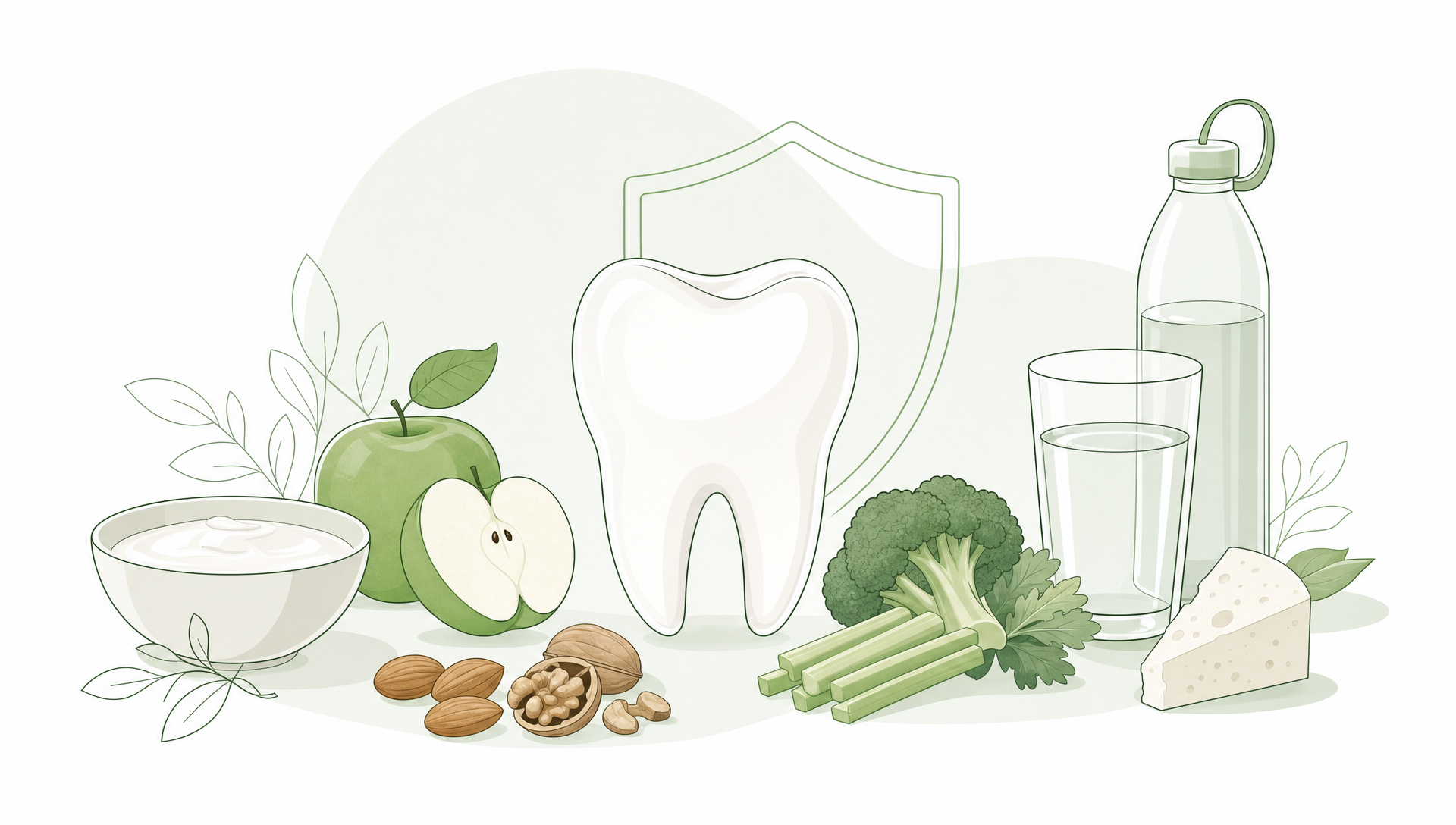
- Include tooth-friendly options such as cheese, plain yoghurt, nuts, vegetables, and whole fruits.
- Avoid brushing immediately after acidic drinks or foods, as enamel may be temporarily softened.
- Use a straw for acidic drinks when practical, and rinse with water afterwards.
For families, the biggest improvement often comes from changing what is available at home. If water is easy to access and sugary drinks are occasional rather than routine, children are more likely to build habits that support healthy smiles into adulthood.
Keep saliva working for you
Saliva is one of your mouth’s natural defence systems. It helps wash away food particles, neutralise acids, and support enamel repair. When your mouth is dry, your risk of tooth decay, bad breath, mouth soreness, and difficulty chewing or swallowing can increase.
Dry mouth can happen for many reasons, including dehydration, mouth breathing, stress, some medications, and certain health conditions. Drinking water regularly is a good starting point, but ongoing dryness should not be ignored.
Sugar-free chewing gum may help stimulate saliva for some adults, especially after meals. However, it may not be suitable for everyone, including young children or people with jaw discomfort. If dry mouth is becoming a regular issue, All About Smiles explains common causes in its article on why your mouth is sometimes dry.
Protect your teeth from avoidable damage
Healthy smiles are not only about preventing decay. Teeth can also be damaged by habits, accidents, and pressure.
If you play contact sport or activities with a risk of knocks to the face, a properly fitted mouthguard can help protect your teeth and soft tissues. Store-bought mouthguards are available, but a dentist-made mouthguard may offer a more secure and comfortable fit.
If you grind or clench your teeth, you may notice jaw soreness, headaches, worn tooth edges, or increased sensitivity. Some people grind at night without realising it. A dentist can check for signs of wear and discuss suitable options, which may include a protective splint.
It is also worth avoiding habits that use your teeth as tools. Opening packets, biting nails, chewing pens, or crunching ice can chip enamel or stress existing fillings and crowns. These small habits may seem harmless until a tooth cracks.
Build a simple daily routine you can actually follow
The best dental routine is one that fits into real life. It should be simple enough for busy mornings, tired evenings, and children who are still learning.
| Habit | When to do it | Why it helps |
|---|---|---|
| Brush with fluoride toothpaste | Morning and night | Removes plaque and strengthens enamel |
| Clean between teeth | Once daily | Removes plaque where toothbrush bristles cannot reach |
| Drink water often | Throughout the day | Helps rinse the mouth and supports saliva |
| Limit sugary and acidic snacks | Most days | Reduces acid attacks on enamel |
| Wear a mouthguard when needed | During sport or as advised | Helps prevent chips, cracks, and injuries |
| Book regular dental check-ups | As recommended by your dentist | Finds problems early and supports prevention |
For children, make the routine visible and positive. Brush together, use a reward chart, or let them choose a toothbrush they like. Young children usually need help brushing until they have the coordination to do it thoroughly on their own.
For adults, pair dental habits with routines that already exist. Floss before your evening shower, keep interdental brushes near your toothbrush, or set a reminder until the habit becomes automatic.
Do not wait for pain before seeing a dentist
Dental problems are often easier to treat when found early. A small area of decay may not hurt at first. Gum disease can progress quietly. Tooth cracks, worn enamel, and failing fillings may also develop before symptoms become obvious.
Regular dental check-ups allow your dentist to assess your teeth, gums, bite, restorations, and oral tissues. Professional cleaning can also remove hardened tartar that brushing and flossing cannot shift at home.
The right check-up interval depends on your oral health, medical history, age, gum condition, diet, and risk of decay. Some people benefit from six-monthly visits, while others may need a different schedule. Your dentist can recommend what is appropriate for you.
If you notice pain, swelling, bleeding gums, a loose tooth, a cracked tooth, sudden sensitivity, or a dental injury, it is best to seek care promptly rather than hoping it settles on its own.
Frequently Asked Questions
How can I get a healthier smile quickly? Start with the basics: brush twice daily with fluoride toothpaste, clean between your teeth once a day, drink more water, and reduce frequent sugary or acidic snacks. For a more noticeable improvement, book a dental check-up and professional clean.
Is flossing really necessary if I brush well? Yes. Brushing cleans the visible surfaces of your teeth, but it cannot fully reach between them. Floss or interdental brushes help remove plaque from those tight areas and support healthier gums.
How often should children see a dentist? It depends on the child’s age, risk of decay, brushing habits, diet, and dental development. A dentist can recommend an appropriate schedule and help children feel comfortable with routine visits.
What drinks are best for healthy teeth? Water is the best everyday drink for teeth, especially fluoridated tap water where available. Milk can also be tooth-friendly. Soft drinks, energy drinks, sports drinks, and fruit juice are best kept occasional because they can be sugary, acidic, or both.
Why do my gums bleed when I brush or floss? Bleeding gums can be a sign of gum inflammation, often linked to plaque build-up. Gentle daily cleaning can help, but if bleeding continues, see a dentist so the cause can be properly assessed.
Keep your smile healthy with local dental care
Everyday habits are the foundation of healthy smiles, but you do not have to manage your oral health alone. Regular check-ups, professional cleaning, and early advice can help you protect your teeth and gums at every age.
If you are looking for a family dentist on the NSW Central Coast, All About Smiles provides general, cosmetic, emergency, and advanced dental care from its Ettalong and Kincumber clinics. You can book an appointment online and ask about flexible payment options when planning your care.
Disclaimer
The information provided on this website is for general informational and educational purposes only. It is not intended to replace professional dental advice, diagnosis or treatment. Dental needs and treatment outcomes vary between individuals. Always seek advice from a qualified dental practitioner regarding your specific circumstances before making decisions about your oral health or treatment. A consultation and clinical assessment are required to determine which treatment options may be suitable for you. All dental procedures carry potential risks and benefits, which will be discussed with you before treatment.